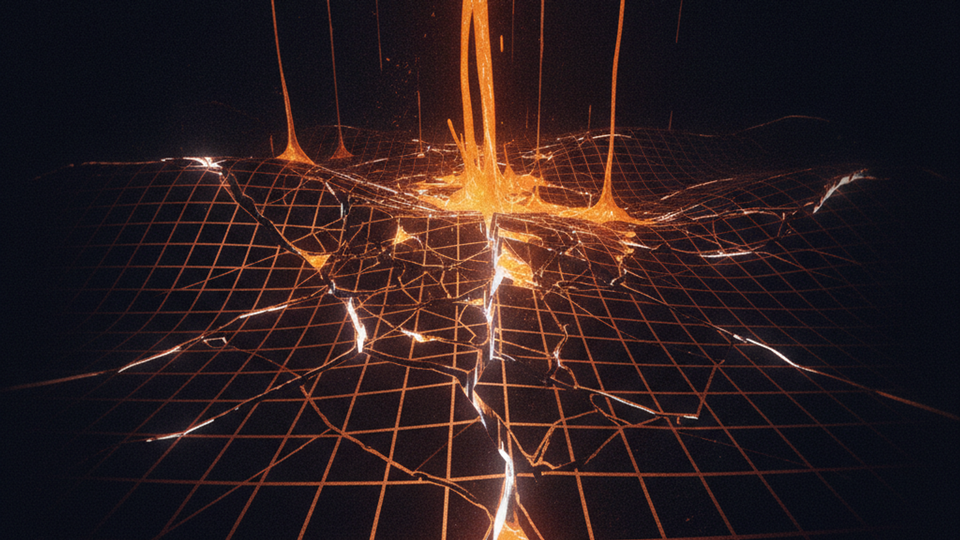
The same AI boom eating the grid is now being sold as the solution to fix it.
The Summary
- IEEE launched a course teaching power engineers how to use AI to modernize the U.S. electrical grid, which is operating at its breaking point due to surging data center demand and renewable integration
- Texas alone reported 220 GW of new connection requests, driven largely by AI and cloud-computing facilities, while millions of digital sensors generate data faster than human operators can process
- The irony: AI infrastructure created the crisis, and now AI analysis is the proposed fix for managing real-time grid stability
The Signal
The U.S. power grid is experiencing what happens when exponential demand meets linear infrastructure. Data centers powering AI tools and high-performance computing require immense energy, and the largest transmission utility in Texas reported 220 gigawatts of new connection requests. For context, that's roughly double the entire generation capacity of Texas today. The grid wasn't built for this.
The squeeze comes from two directions simultaneously. First, electricity demand is spiking faster than utilities can build capacity. Second, the supply side is shifting from predictable coal and gas plants to weather-dependent renewables like wind and solar. Balancing supply and demand second-by-second to prevent blackouts used to be manageable. Now it's a high-wire act performed in a windstorm.
"Millions of modern digital sensors, smart meters, and grid monitors are generating nonstop waves of information that require instant, automated computer analysis because human operators cannot process it fast enough."
Enter AI as both problem and proposed solution. IEEE's new course teaches power engineers to use machine learning for predictive maintenance, real-time load balancing, and renewable energy forecasting. The pitch makes sense on paper: deploy AI agents to process sensor data, predict equipment failures before they cascade, and optimize energy flow across a network with thousands of moving parts.
But here's the tension nobody wants to say out loud. The AI infrastructure creating the demand crisis is energy-intensive by design. Training large language models burns megawatt-hours. Running inference at scale requires always-on compute. The more AI we deploy to manage the grid, the more energy the grid needs to supply. It's a recursive problem disguised as a solution.
Key operational realities:
- Grid operators now manage data from millions of sensors generating continuous streams
- Severe weather events (like Texas's winter freeze) cause costly disruptions the aging infrastructure can't handle
- Traditional engineering roles have evolved into complex, real-time decision-making under volatile conditions
The IEEE course addresses a real skills gap. Power engineers trained in the analog era now need to understand neural networks, time-series forecasting, and edge computing. The coursework covers predictive analytics for equipment maintenance, AI-driven demand response systems, and renewable energy integration models. It's practical training for an industry that can't afford to wait for the next generation of workers.
The Implication
Watch for a wave of AI-native grid management systems in the next 18 months. Utilities are hiring data scientists alongside electrical engineers. Startups building grid optimization tools will get funded. The sector is moving fast because it has no choice.
For anyone in the agent economy, this is a blueprint: identify critical infrastructure buckling under complexity, train AI to handle what humans can't process fast enough, then sell the tools back to the industry creating the demand. It's elegant and circular.
The real question is whether we're building resilience or just adding another layer of digital dependency to physical infrastructure that's already fragile. If the AI managing the grid goes down, what's the backup plan?