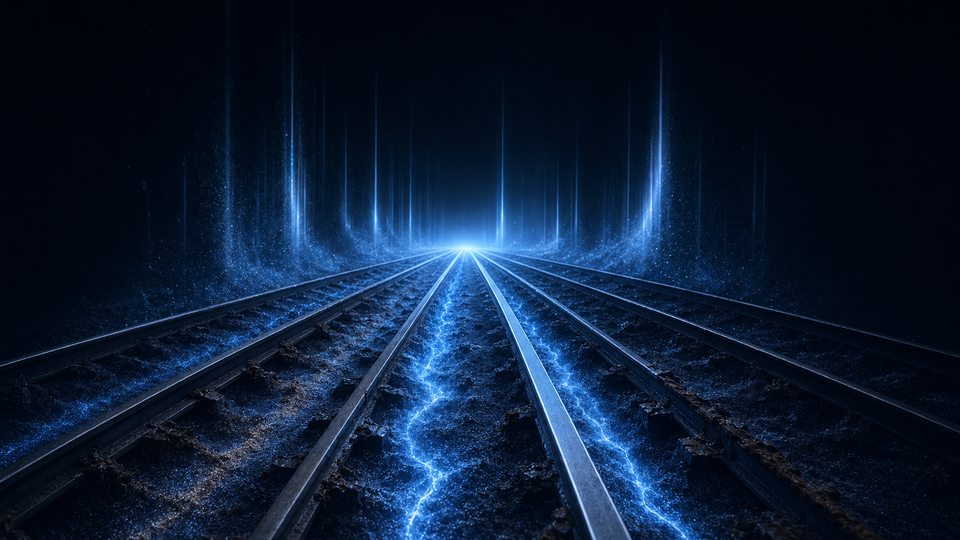
The question isn't whether AI is overhyped — it's whether the overhype builds infrastructure that outlasts the hype cycle.
The Summary
- Platformer argues the AI boom mirrors the 1800s railroad bubble more than crypto: massive capital deployed, many failures expected, but lasting infrastructure gets built regardless
- The railroad analogy matters because those tracks became the backbone of the industrial economy, even as most railroad companies went bust
- Meanwhile, the Musk-OpenAI trial kicks off with arguments over whether OpenAI violated its founding mission by going for-profit
- Separately, the government is paralyzed on what to do about Mythos, the new AI platform raising questions about content moderation and liability
The Signal
The railroad comparison is the right frame, and here's why it matters for anyone building in this space. Between 1840 and 1890, British investors poured roughly £3 billion into railways — about 40% of all capital formation in that era. Most of those investments failed. But the tracks stayed.
That's the pattern playing out now with AI infrastructure. Data centers are going up at record pace. NVIDIA can't make chips fast enough. Every cloud provider is building GPU clusters that will still be running code in 2045, long after today's hot AI startups have pivoted, merged, or shut down. The question isn't whether we're in a bubble. We obviously are. The question is whether this bubble leaves behind useful infrastructure or just vaporware.
"The tracks stayed, even when the investors lost everything."
Contrast this with crypto, which built infrastructure for a problem most people don't have. Blockchains are solutions looking for use cases. AI infrastructure — compute, training pipelines, model deployment at scale — solves real problems today. Businesses are already using AI agents to handle customer service, write code, analyze data. Not in theory. Right now.
The OpenAI trial adds another data point. Elon Musk is suing over OpenAI's shift from nonprofit to capped-profit structure, arguing the company abandoned its founding mission of developing AGI for the benefit of humanity. Whether Musk has standing is almost beside the point. The trial reveals the core tension: building transformative AI requires billions in capital, but raising billions means giving investors a path to returns, which means optimizing for profit over mission.
This is the railroad story again. The infrastructure gets built because there's money to be made. The public benefit is a side effect, not the goal. Some investors get rich. Most get wrecked. But the infrastructure compounds.
Key dynamics to watch:
- How much capital flows into pure infrastructure (compute, chips, training) vs. application layer
- Which "railroad companies" survive vs. which just laid track for someone else to use
- Whether open-source models become the equivalent of public rail infrastructure
The Mythos paralysis is revealing too. When a new AI platform emerges and the government can't figure out if it's a publisher, a platform, a tool, or something else entirely, that's a sign the old regulatory categories don't map to the new reality. We're in the phase where the infrastructure outpaces the framework. That always creates risk, but it also creates opportunity for builders who can move faster than regulators.
The Implication
If this is the railroad bubble and not the crypto bubble, the play is infrastructure and picks-and-shovels. Don't bet on which specific AI company wins. Bet on the fact that whoever wins will need compute, data pipelines, and deployment infrastructure. Or bet on the open-source alternative — the public railroad that anyone can use.
For individuals: the transition moment is now. The infrastructure is being built. The jobs that disappear in the next five years won't come back. The jobs that get created will require fluency with AI tools, not resistance to them. Learn to build with agents or learn to manage them. Those are the options.