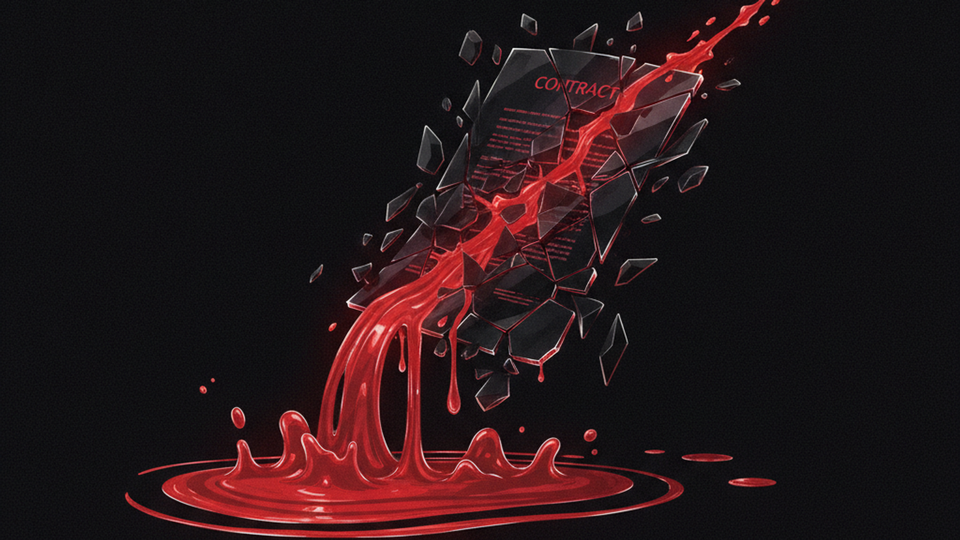
The company building Claude just told potential investors it has no idea who pays when its AI breaks the law.
The Summary
- Anthropic disclosed uncertain legal risks from rogue AI agents in its IPO prospectus, marking the first time a major AI lab has formally warned investors about agent liability exposure.
- The disclosure comes amid an ongoing clash between Anthropic and the US administration over AI regulatory oversight, creating regulatory uncertainty that could affect market valuations.
- Legal frameworks for AI agent liability don't exist yet, leaving tech companies exposed to unknowable future liability as they ship increasingly autonomous systems.
The Signal
Anthropic's IPO prospectus includes explicit warnings about legal risks from AI agents operating autonomously. This isn't boilerplate risk language. This is a frontier AI lab telling Wall Street: we're building systems that can take actions on behalf of users, and nobody knows what happens when those actions break laws or cause harm. The legal question isn't theoretical. Who's liable when an AI agent commits fraud while booking your travel? When it violates export controls while sourcing components? When it inadvertently insider trades while managing your portfolio?
The timing matters. Anthropic is simultaneously locked in a dispute with the US administration over regulatory oversight. The government wants guardrails. Anthropic wants to keep shipping. Neither side has answers to the liability question, because the legal frameworks don't exist yet. This creates a valuation problem: how do you price a company when its core product might generate unknowable future liabilities?
"The disclosure highlights the urgent need for legal frameworks to address AI liability, potentially reshaping tech industry regulations."
The prospectus language is significant because it acknowledges what builders have been quietly worried about for months. Every company shipping AI agents, from customer service bots to coding assistants to financial analysis tools, is operating in a legal vacuum. Traditional product liability doesn't map cleanly to software that makes decisions. Agency law assumes human agents. Securities law assumes human traders. None of it was written for systems that operate at machine speed with machine-scale reach.
The Web4 agent economy is already here. Agents book meetings, write code, analyze documents, manage workflows. They're embedded in products from OpenAI, Google, Microsoft, and dozens of startups. Anthropic's disclosure suggests the legal liability question could reshape valuations across the entire tech industry. Insurance companies don't know how to price this risk. Courts don't know how to adjudicate it. Regulators don't know how to prevent it.
The Implication
Every company building or deploying AI agents should read this prospectus. The liability question isn't going away, and it won't be solved by better prompts or stricter guardrails. This requires new legal frameworks, new insurance products, and new thinking about agency and responsibility. Until then, every agent you ship carries unknown tail risk. Smart builders are documenting decision processes, implementing human-in-the-loop systems for high-stakes actions, and watching Anthropic's regulatory battle closely. What gets decided there will set precedent for everyone else. The agent economy is moving faster than the law. That gap is now a line item in a public company's risk disclosure.