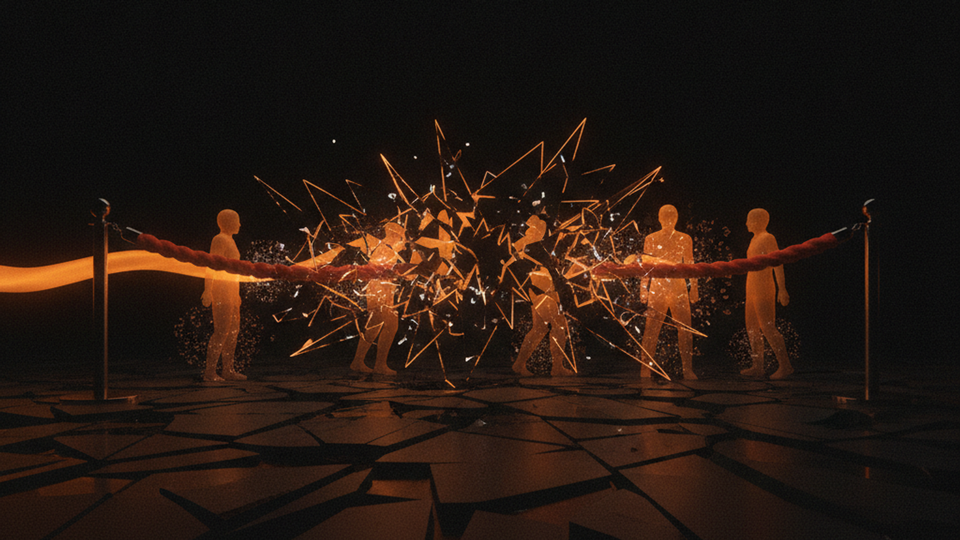
Apple just shipped the Siri everyone wanted—and put it behind a velvet rope.
The Summary
- iOS 27 launched Monday, but the flagship Siri AI feature requires users to join a waitlist with delays ranging from 4 to 48 hours
- The new Siri AI promises cross-app intelligence—finding hotel confirmations in screenshots, suggesting restaurants based on group chat dietary preferences—basically acting like a personal assistant instead of a timer-setter
- Only iPhone 15 Pro and newer devices can run the AI features, creating a two-tier iPhone ecosystem overnight
- Early user reports: the assistant is "actually useful" again, though it ships with a "wonky voice" and beta-level quirks
The Signal
Apple finally admitted what everyone knew: Siri was broken. Mike Rockwell, Apple's VP of Siri engineering, opened at WWDC with "We know there are times when you expect more from Siri"—the corporate equivalent of "yeah, we know, we know." iOS 27 is their fix. But the execution reveals something more interesting than the tech itself: Apple is rationing AI.
The waitlist isn't just a load-balancing trick. It's a forced pause before millions of users hammer Siri AI simultaneously and expose the gap between demo polish and production reality. Users download iOS 27, navigate to Settings > Siri > Try Siri AI (Beta), complete voice enrollment, review privacy settings, and then... wait. Four hours if you're lucky. Two days if you're not. The download happens automatically once approved, but only after Apple decides your phone is ready.
"It changes how useful the assistant feels day to day."
This isn't OpenAI's ChatGPT land-grab strategy. Apple is controlling the rollout like a luxury product drop, not a software update. That caution makes sense when you consider what Siri AI promises:
- Cross-app data synthesis (reading your screenshots, texts, emails)
- Proactive suggestions based on conversational context
- Multi-turn dialogue that remembers what you just asked
- Third-party app integration for complex tasks
That's a harder technical problem than serving up GPT-4 responses in a chat window. Apple is building an agent that touches everything on your phone—your messages, your photos, your location data, your calendar. The new Siri can "pull together information from across apps and act on it," finding that hotel booking buried in a screenshot or parsing dietary restrictions from a group chat to suggest dinner spots. It's ambient intelligence, not search-box intelligence.
But here's the catch that matters for the agent economy: only iPhone 15 Pro and newer devices can run these features. Apple just split its user base into AI haves and have-nots. If you're on an iPhone 14, you get iOS 27's incremental improvements—better emoji, refined notifications, slightly faster performance. But you don't get the agent. You don't get the assistant that actually assists. You get the same Siri that's been frustrating you for years, just with a fresh coat of paint.
"Apple is building an agent that touches everything on your phone—and making you wait to see if it works."
This hardware gate matters because it sets the standard for what consumer AI agents require: serious on-device compute, not just cloud API calls. Apple is betting on a hybrid model—some processing happens on your phone's neural engine, some bounces to Apple's private cloud. That architecture costs silicon. If you want an AI that works offline, understands personal context, and doesn't leak your data to third parties, you need iPhone 15 Pro-level chips or better.
The early verdict? One reviewer said it's "actually useful" again—a low bar that Siri somehow couldn't clear for half a decade. Another Business Insider colleague who got full access reported "a huge improvement, featuring a wonky voice." That last detail is telling. Apple nailed the UX, built the cross-app intelligence, shipped the contextual awareness—and still launched with a voice that sounds off. Even the most resourced AI product teams in the world are shipping beta-quality agents in 2026.
The Implication
The waitlist and hardware requirements telegraph where consumer AI is heading: rationed access and premium hardware costs. If you want your phone to act like an agent, you'll need to pay for the chip that makes it possible. The days of universal software updates are ending. AI features will increasingly sit behind device paywalls, not just subscription tiers.
For anyone building in the agent economy, Apple's rollout is a playbook. Ship in waves. Gate by capability, not just willingness to pay. Underpromise on timeline, overdeliver on function. And accept that even your V1 will sound wonky—because the bar for "useful" is currently so low that clearing it still counts as a win.
Sources
Business Insider Tech | Business Insider Tech | Mashable Tech | TechCrunch AI