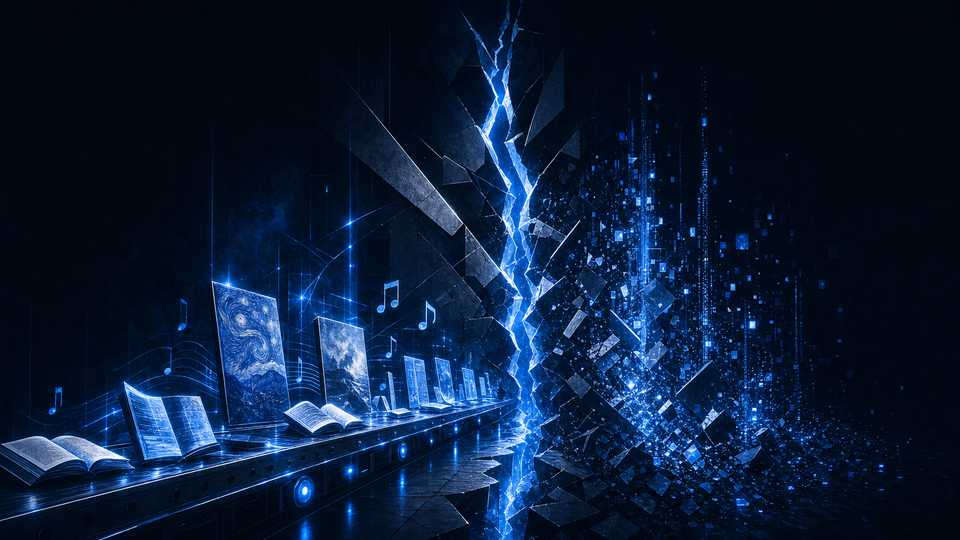
Australia's ruling party is fracturing over whether to feed its creative class to the AI training models or actually protect the people who make things.
The Summary
- Labor MP Ed Husic says weakening copyright to benefit AI companies betrays the party's founding principle of "a fair day's pay for a fair day's work", warning self-regulation is "doomed to failure"
- The Media Entertainment & Arts Alliance called for tougher copyright rules to prevent creative works being scraped for AI training ahead of Prime Minister Albanese's major AI speech
- Author Anna Funder called herself a "victim of crime" at Parliament House, describing how tech companies "hoovered up" her literary works for profit
- The Labor party is split between attracting datacenter investment and protecting creators' rights as Australia shapes its AI policy framework
The Signal
Australia is having the copyright fight that every other country is trying to avoid. Prime Minister Anthony Albanese will deliver a landmark speech on AI while his own party tears itself apart over whether training data is theft or progress. On one side: AI companies promising datacenters and jobs if Australia loosens copyright. On the other: writers, artists, and journalists who've watched their work get scraped without permission or payment.
Ed Husic, a Labor MP, isn't being subtle about where he stands. He's telling his colleagues that watering down copyright for AI companies betrays Labor's core principle: a fair day's pay for a fair day's work. Husic is pushing for stricter rules on big tech, arguing that letting them self-regulate is "doomed to failure." This matters because Labor isn't some fringe party. They're in power, and this split shows the exact tension playing out in boardrooms and parliaments everywhere.
"Watering down copyright law to benefit AI companies would be going against the ethos of the party."
The creative class isn't waiting for politicians to figure it out. Anna Funder, author of Stasiland, stood in Parliament House and called herself a "victim of crime". She's describing the same thing every writer, illustrator, and musician is describing: tech companies hoovered up their work, fed it to models, and are now selling tools that compete with the very people whose labor built the dataset. The Media Entertainment & Arts Alliance, representing journalists and creatives, is demanding new rules before AI companies can claim any more training data.
Here's the actual fight: Australia wants datacenter investment. AI companies want cheap training data. Creators want to get paid. Only two of those three can win under current copyright law. If Australia caves and creates a "fair use" style exemption for AI training, they get the datacenters but gut the creative economy. If they hold the line on copyright, they might lose billions in tech investment to countries with looser rules.
Key dynamics:
- Labor MPs are torn between economic development and protecting their traditional base (unions, creatives, workers)
- AI companies are leveraging datacenter investment as bargaining power for weaker copyright
- Creative unions are mobilizing before policy gets locked in, not after
The Implication
Watch what Australia does here. If Labor caves to AI companies, it sets a precedent that training data is free and copyright is negotiable when enough money is on the table. If they hold the line, they become the test case for whether a country can have both AI infrastructure and creator protections. Either way, this isn't a uniquely Australian problem. Every government is getting the same pitch from AI companies: weaken copyright or we'll build our datacenters somewhere else. The question is whether any government will call that bluff.
For creators, this is the fight. Not in two years when the models are already trained. Now, while policy is still fluid. Australia's decision will echo.