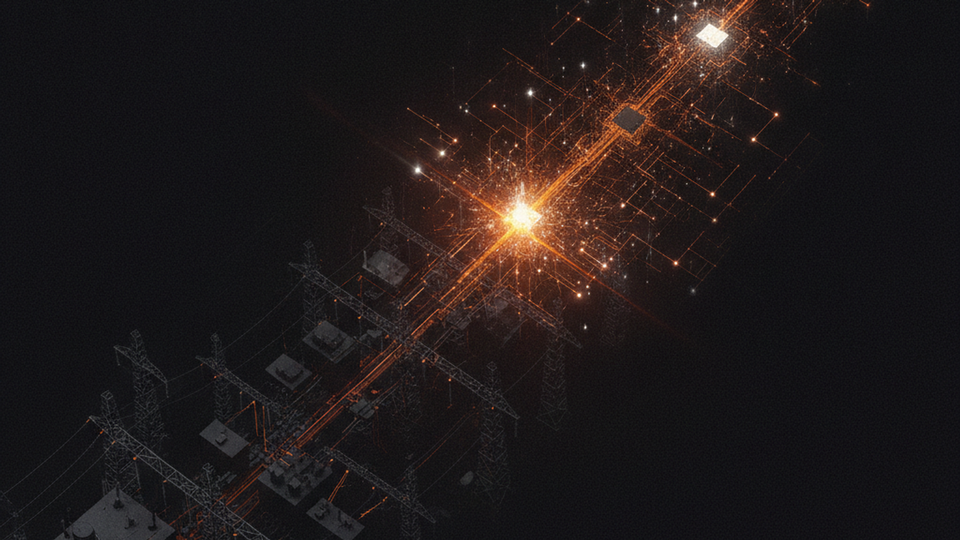
The crypto miners who spent years figuring out how to buy power cheap are now the only ones who know how to sell it back expensive.
The Summary
- Bitcoin miners are pivoting infrastructure to AI compute, leveraging their grid management expertise and converting mining sites into data centers
- Luxor Technology's COO calls miners a "valuable asset" for electric grids, marking a shift from energy pariahs to grid stabilizers
- The playbook: convert stranded energy infrastructure into AI compute hubs, then sell flexibility back to utilities
The Signal
Bitcoin miners built a business around one simple arbitrage: find the cheapest electricity on earth, plug in ASICs, convert watts to coins. That meant putting hardware in places no one else wanted to go. West Texas wind farms with nowhere to send power. Icelandic geothermal plants running 24/7. Appalachian natural gas wells flaring methane into the sky.
The unintended consequence? They became the world's best experts at grid flexibility. Mining rigs can shut off in milliseconds. When Texas grid operator ERCOT needs to shed load during a heat wave, miners go dark and collect demand response payments. When a wind farm overproduces at 3am, miners soak up the excess. Utilities quietly started seeing them not as leeches but as shock absorbers.
"Miners spent a decade learning to operate at the edge of the grid. Now that edge is worth more than the mining itself."
Now AI compute needs the same thing Bitcoin mining needed: massive amounts of cheap power in places with low land costs and high energy availability. Except AI inference and training can't shut off on a whim the way mining can. The compute has to stay live. But the *infrastructure* is identical. Big transformers. Cooling systems. Fiber backhaul. Industrial real estate with megawatt-scale power hookups already permitted and built.
Luxor Technology, which runs mining pool software and services, sees the conversion happening in real time. Sites that were running 100 megawatts of SHA-256 hashing are swapping out Bitmain S19s for Nvidia H100s. Same building. Same power contract. Different chips.
The grid stabilization skill set transfers directly. Miners already have:
- Real-time energy market trading desks that buy power hourly
- Contracts with utilities for interruptible load programs
- Physical infrastructure designed for 99%+ uptime in harsh environments
- Expertise in cooling high-density compute at industrial scale
The smart play isn't shutting down Bitcoin mining entirely. It's running a hybrid model. Mine Bitcoin when power is cheap and AI compute demand is low. Flip to AI inference when someone will pay more for the same kilowatt-hour. Sell grid services to the utility when neither is profitable. The same flexibility that made miners annoying to regulators now makes them indispensable.
The broader shift: crypto infrastructure companies are realizing they accidentally built the scaffolding for the agent economy. GPU marketplaces. Decentralized compute networks. Tokenized energy credits. These weren't hypothetical DeFi experiments. They were stress tests for systems that will matter when millions of AI agents need to pay each other for compute in real time.
The Implication
If you're in energy, start talking to crypto miners. They're about to become your most sophisticated customers and your best grid flexibility providers. If you're in AI infrastructure, the cheapest compute in 2027 won't be in Ashburn datacenters. It'll be in repurposed mining facilities in places you've never heard of. And if you're building agent-to-agent payment rails, the miners already figured out how to move value at machine speed. Learn from them.