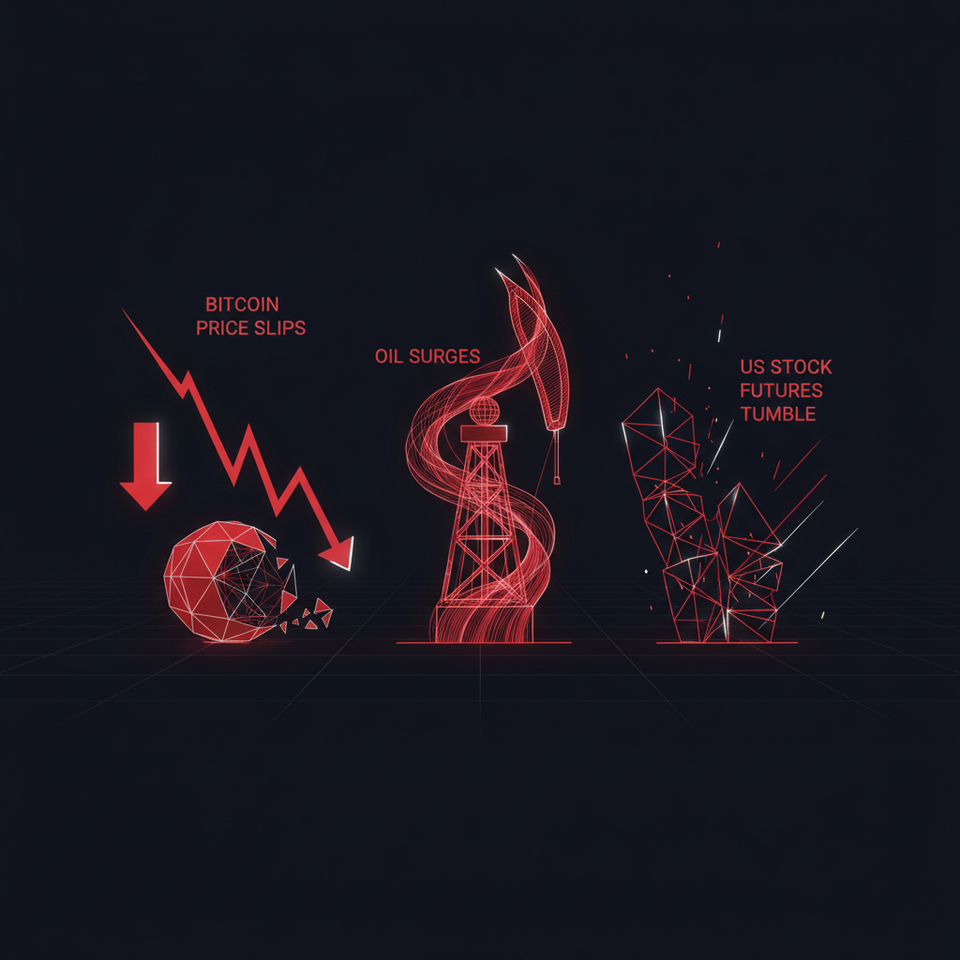
Bitcoin held $83K while oil spiked 3% and stock futures cratered, which tells you everything about how markets now see digital assets in a crisis.
The Signal
The decoupling everyone's been talking about for years just showed up for work. When geopolitical tension sends traditional risk assets down, Bitcoin used to follow with a 24-hour lag. Not anymore. While S&P futures dropped and crude jumped on Middle East escalation fears, Bitcoin barely flinched, trading in a tight range around $83,000. This isn't about Bitcoin being "digital gold" in some abstract sense. It's about infrastructure maturation. Institutional players now hold Bitcoin through regulated vehicles with proper custody, treasury departments have it on balance sheets, and enough sovereign wealth funds are dabbling that the old retail panic patterns don't dominate price action anymore. The real test isn't whether Bitcoin can hold during a headline shock. It's whether it can maintain independence when energy prices, which directly impact mining economics, stay elevated for weeks. A sustained oil surge above $85 changes miner profitability calculations, potentially forcing some operations offline and creating real supply-side pressure. That's when correlation could snap back.
The Implication
Watch theHashRate. If Bitcoin maintains this stability while miners face margin compression from higher energy costs, that's your signal that institutional bid is real and deep. If HashRate drops 15% or more and price follows, we're back to the old playbook. Either way, this moment marks a shift in how Bitcoin responds to macro shocks.
Source: Decrypt