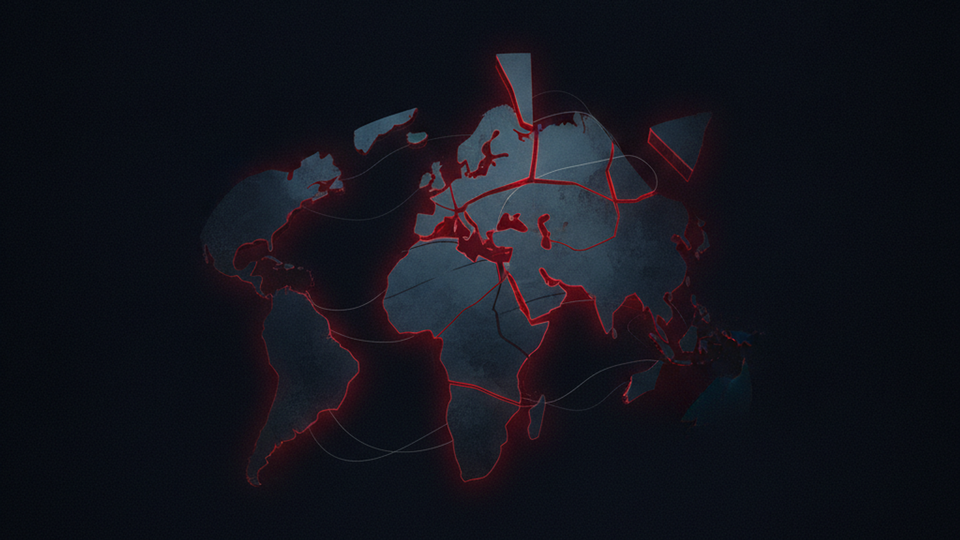
The fracture lines in AI governance just became national borders.
The Summary
- Canada proposed a new global oversight body for AI safety, challenging the current US-China duopoly on tech governance and opening space for international collaboration.
- China immediately rejected Anthropic's parallel call for independent AI safety monitors, exposing the core tension: who gets to decide what "safe AI" means.
- The collision reveals a harder truth than regulatory complexity. It's about sovereignty in the age of agents.
The Signal
Canada's timing isn't accidental. As AI labs race toward systems that can write code, manage infrastructure, and execute complex multi-step tasks without human intervention, the governance vacuum has become impossible to ignore. The US approach has been industry self-regulation with voluntary commitments. China's has been state control tied to national security. Canada is betting there's a third path: multilateral oversight that doesn't require either Silicon Valley's trust-me optimism or Beijing's centralized authority.
The proposal arrives at the exact moment China shut down Anthropic's pitch for independent safety monitors. That's not a coincidence. It's a preview of every negotiation to come. Anthropic's vision involves external auditors with access to model internals, testing protocols, and deployment decisions. China's response: no foreign entity gets that kind of visibility into systems we consider strategic assets.
"The growing divide in AI governance complicates global efforts for unified safety standards and regulatory compliance."
Here's what this collision means in practice:
- AI labs building foundation models now face bifurcated compliance regimes with incompatible requirements
- International model deployment becomes a regulatory minefield where safety standards conflict with sovereignty claims
- The "global AI safety body" concept runs headfirst into the reality that China and the US will never cede authority to a third party
Canada's play is to position itself as the neutral convenor, the country without a hyperscaler trying to dominate the agent economy. It's smart positioning. But it assumes the major players want coordination more than they want control. China's rejection of outside monitors suggests otherwise.
The technical challenge underneath all this: AI safety isn't like nuclear nonproliferation. You can't inspect a model the way you inspect a reactor. The risk surface is enormous. A foundation model can be fine-tuned for harm in hours. Weights can be stolen, leaked, or recreated. Safety evaluations are adversarial games where the evaluator is always behind. Any "global body" would need not just authority but technical capability that doesn't exist yet.
The Implication
If you're building AI systems for deployment across borders, price in regulatory fragmentation as a permanent cost structure. The dream of one global standard is dead. Plan for multiple compliance tracks, regional model variants, and jurisdictional restrictions on capability levels.
For crypto projects integrating AI agents: this governance split creates opportunity. Decentralized agent networks that don't require trust in a single jurisdiction suddenly look more attractive than ones tied to specific national regulatory regimes. The more fragmented AI governance becomes, the more valuable credibly neutral infrastructure gets.