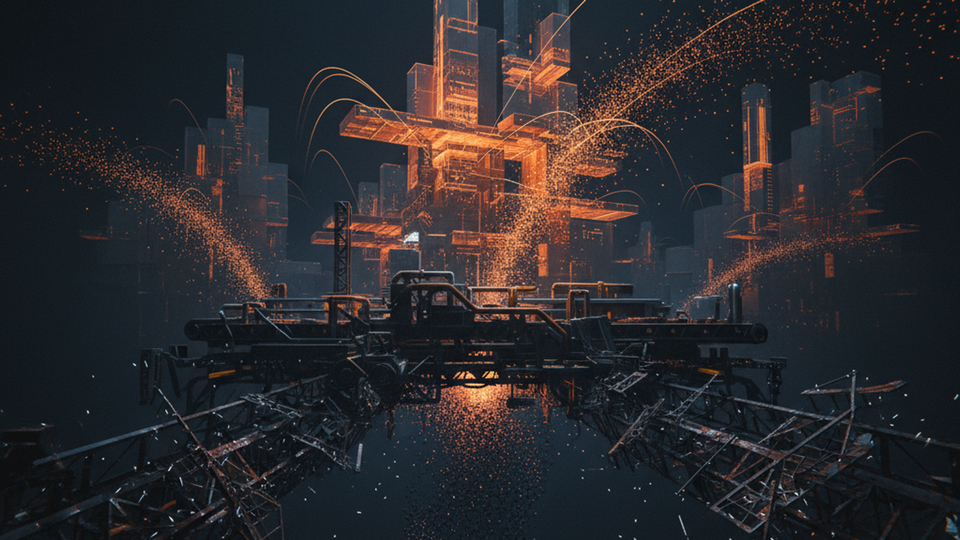
While American AI labs chase AGI, China's newest unicorn is solving a harder problem: making 3D content generation cheap enough to run game studios out of business.
The Summary
- Vast, a 3D-modeling AI startup, just raised nearly $200 million at a $1 billion valuation, joining China's growing roster of AI unicorns
- Founded by a 29-year-old gamer, the company automates 3D asset creation — the most expensive bottleneck in games, VR, and virtual worlds
- This isn't another chatbot wrapper. It's infrastructure for the metaverse nobody's calling the metaverse anymore.
The Signal
Vast's unicorn status matters because 3D content is the unsung chokepoint of the agent economy. Every virtual world, digital twin, and AI-native product needs geometry. Buildings, characters, objects, environments. Today, human artists model them by hand. A single AAA game character can take weeks. A cityscape takes months. Vast is automating that into minutes.
The founder's gaming background is the tell. Gamers understand the economics of virtual goods in ways that enterprise software people don't. They've lived in economies where a rare skin sells for thousands of dollars and where user-generated content drives billions in platform revenue. They know that 3D assets aren't just art — they're inventory for digital worlds.
"The most expensive part of building the metaverse was never the code. It was always the content."
China's AI unicorn factory is following a different playbook than the West. While Anthropic and OpenAI race toward reasoning models, Chinese startups are targeting specific production bottlenecks:
- DeepSeek focusing on efficient, affordable inference
- Moonshot building context-aware assistants
- Vast automating 3D asset pipelines
This is the pattern: find an expensive human workflow in the digital economy, automate it with AI, scale it in China's massive domestic market. The $200 million round suggests investors believe 3D generation is ready to cross the quality threshold where it's cheaper to generate than to commission.
The timing aligns with two converging trends. First, game engines like Unreal and Unity now support AI-generated assets in production pipelines. Second, Apple's Vision Pro and Meta's Quest headsets created real demand for spatial computing content. Vast isn't selling to a hypothetical future. It's selling to studios shipping products this year.
The Implication
Watch what happens to 3D artist employment over the next 18 months. If Vast's tech works at scale, the $200 billion gaming industry just found a way to cut one of its biggest cost centers. That's not a productivity boost. That's a workforce reset.
For builders in crypto and Web3, this is your signal to move faster on on-chain 3D asset standards. If AI can generate quality models at cost, the next question is provenance and ownership. Who owns a procedurally generated sword? The prompt writer? The model trainer? The platform? The answers will be decided by whoever ships the infrastructure first.