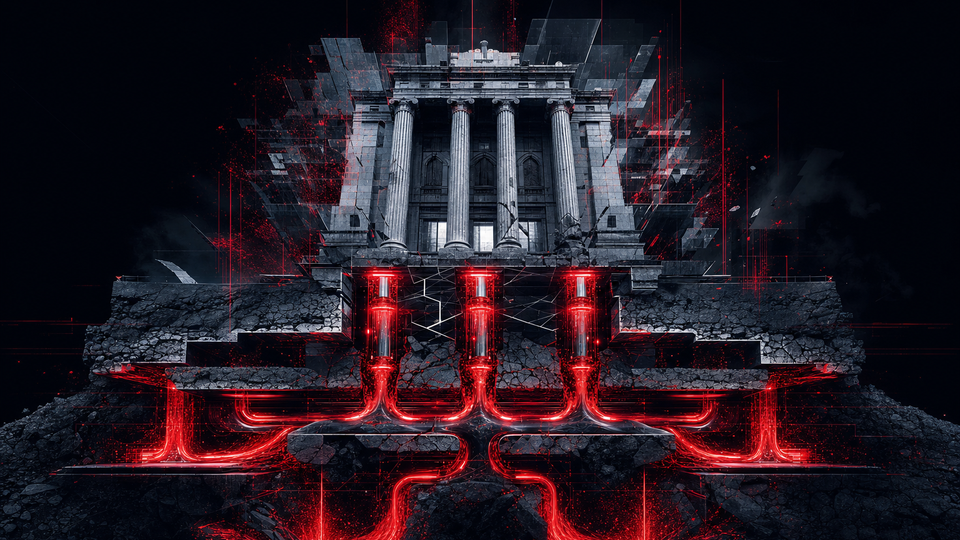
When HSBC, Apollo, and Abu Dhabi's sovereign wealth fund write checks together, they're not betting on the future—they're hedging the present.
The Summary
- Digital Asset closed a $355M round led by a16z crypto, with backing from HSBC, Apollo, CME, BNP Paribas, ADIA, ABN Amro, S&P Global, Tradeweb and 20+ other institutional investors
- This isn't crypto money funding crypto infrastructure. This is Wall Street incumbents paying to rebuild their own plumbing.
- Canton Network handles privacy-preserving interoperability for tokenized assets. Translation: banks can finally move digital securities between systems without exposing their entire trade book.
The Signal
The investor list reads like a directory of institutions that hate each other's guts in public markets but apparently agree on one thing: their current settlement infrastructure is a liability. HSBC, BNP Paribas, ABN Amro are global banking competitors. Apollo is private equity. CME runs derivatives. S&P Global rates debt. Tradeweb is a bond platform. They don't collaborate. They compete. Except here.
Digital Asset's Canton Network solves a problem most people don't know exists because it happens in the 48-hour settlement gap between when you buy a stock and when you actually own it. Right now, if Goldman tokenizes a bond on one blockchain and JP Morgan tokenizes a loan on another, they can't talk to each other without revealing trade data to the whole network. Canton uses a privacy model that lets institutions transact across chains while keeping position data siloed. It's the difference between a public ledger and a need-to-know ledger.
"When sovereign wealth funds and Wall Street market makers both write checks, they're not funding an experiment. They're funding their exit plan."
The timing matters. Tokenized treasuries hit $2.4 billion in assets this year. Blackrock's BUIDL fund, Franklin Templeton's BENJI, and Ondo's OUSG all run on public or permissioned chains. But none of those issuers want their competitor seeing real-time flow data. Canton is the middleware that makes institutional tokenization viable at scale without turning every trade into a transparency nightmare.
Key capabilities Digital Asset is positioning:
- Privacy-preserving interoperability between siloed blockchain networks
- Atomic settlement across asset classes (equity, debt, derivatives)
- Smart contracts that enforce compliance rules without exposing proprietary strategies
This round comes after Digital Asset's earlier raises totaled north of $600 million, with past backers including ASX (Australia's stock exchange) and Deutsche Börse. The firm's tech already underpins ASX's long-delayed blockchain settlement system and the Singaporean government's Project Guardian for tokenized assets.
The Implication
If you're watching crypto adoption, stop counting Coinbase downloads. Watch where ADIA and Citadel Securities put their money. They're not betting on decentralization. They're betting on better rails for the same centralized system. The irony is that this $355M round might do more to normalize blockchain infrastructure in finance than every DeFi protocol combined, precisely because it keeps the power structure intact while upgrading the pipes underneath.
For anyone building in tokenized assets, this is your template. Privacy first. Interoperability second. Decentralization optional. The institutions have spoken.