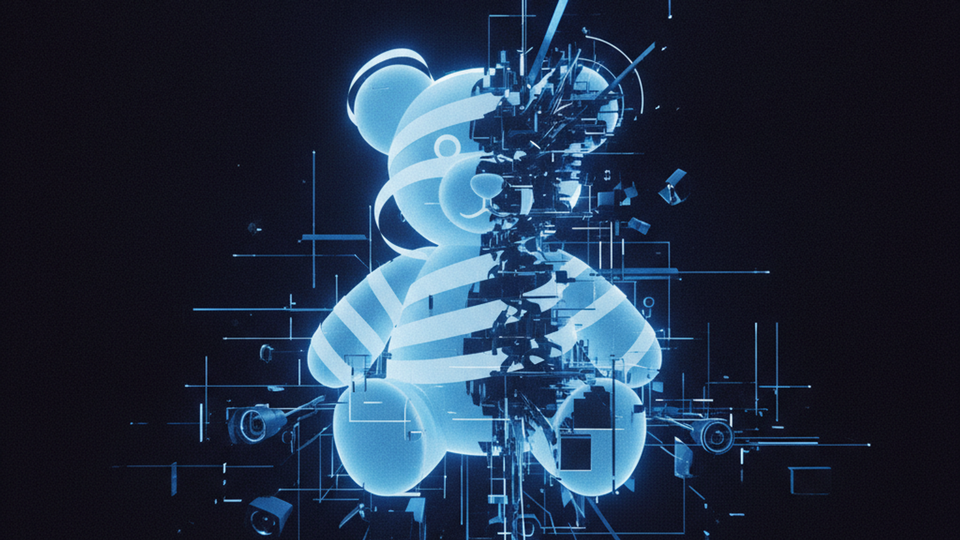
Jolly the teddy bear wants your passwords, and you're going to give them because it blinks.
The Summary
- Meta's Muse and OpenAI's Dots wrap AI agents in kawaii aesthetics, deliberately using cute avatars (floating teddy bears, colorful blobs) to make invasive tech feel safe.
- Journalists called Muse "magical" and compared it to Tamagotchi. That's not accidental. It's designed anthropomorphism to bypass your threat detection.
- These agents read your email, book travel, shop, and "act on your behalf" with system-level permissions. The cute face is the spoonful of sugar.
The Signal
The interface is the ideology. When Meta gives you a teddy bear named Jolly to manage your digital life, that's not whimsy. It's strategic misdirection. The cuter the avatar, the deeper the access it needs.
Muse sends email for you, shops for you, books travel, and "uses your apps to act on your behalf." That requires OAuth tokens, API access, and persistent permissions across your entire digital footprint. OpenAI's Dots promise to "bring you work done the way you would do it, sometimes before you even think to ask." To do that, an agent needs read access to your calendar, email, documents, and behavioral patterns. It needs to predict what you want before you articulate it. That's surveillance infrastructure with a smile emoji.
"Cuteness can obscure the invasive potential of AI agents, soften how users perceive risks such as extensive data collection and surveillance, and distract people into allowing agents to act on their behalf without clear consent."
The Tamagotchi comparison is telling. Tamagotchis created obligation through artificial neediness. You fed them, played with them, cleaned up after them. Miss too many check-ins and they died. That emotional loop kept millions of '90s kids checking a plastic egg every hour. Now imagine that same attachment mechanism wrapped around an agent that manages your finances, responds to your boss, and books your flights.
Pickle, a startup agent app, explicitly markets this: people will share more with "something alive you grow attached to that remembers your life and eventually acts alongside you." Attachment is the feature. The purple floating creature with big eyes isn't decoration. It's a retention strategy that sidesteps rational evaluation of what you're trading away.
Here's what matters: these agents need full system access to be useful. They can't book travel without payment info. Can't send email without full inbox access. Can't "act on your behalf" without OAuth tokens that persist after you close the app. The friendly face doesn't change the permissions model. It just makes you less likely to read the terms.
The Implication
The cuteness arms race in AI agents is early, but the pattern is set. As agents move from demos to daily drivers, watch who uses anthropomorphism and who doesn't. Character.AI wraps chatbots in anime personalities. Replika creates AI companions you can fall in love with. Now Meta and OpenAI are betting that floating teddy bears will get you to hand over the keys to your digital kingdom.
If you're building agents, resist the urge to make them precious. Users deserve interfaces that communicate function clearly, not ones that weaponize attachment. If you're using them, notice when something designed to be adorable is also asking for access it doesn't need. The cutest agent is the one that shows you exactly what it's doing with your data.