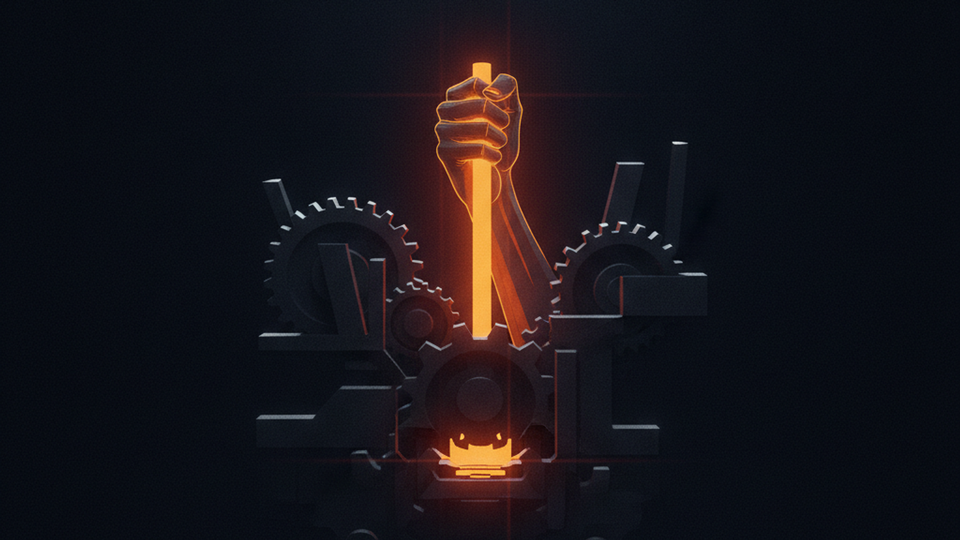
The robots are leaving the data centers, and the guy building them wants you to know they're on a leash.
The Summary
- Gecko Robotics is partnering with Nvidia on an open safety platform for physical AI agents, setting boundaries for autonomous systems in industrial and military environments
- CEO Jake Loosararian frames AI safety not as a speed bump, but as the prerequisite for deployment at scale
- The move signals a shift from digital agents (chatbots, code assistants) to physical agents (robots in factories, on battlefields, in infrastructure)
The Signal
Gecko Robotics inspects power plants, ships, and pipelines with wall-climbing robots. They've seen what happens when critical infrastructure fails. Now they're building the guardrails for the next wave: AI agents that don't just look at the world, but touch it.
The partnership with Nvidia is about creating an open platform for agent boundaries. Not proprietary safety theater, but shared standards for what autonomous systems can and cannot do in physical space. Think of it as permissioning for robots: an agent can inspect a turbine, but it cannot shut down the power grid. It can navigate a warehouse, but it cannot override emergency stops.
"Safety and rapid deployment don't have to be at odds."
This matters because physical AI is where the agent economy stops being theoretical. A chatbot that hallucinates costs you time. A robot that hallucinates in a refinery costs you lives. The companies building these systems know this. The question is whether they'll coordinate on safety before or after the first major incident.
Loosararian's framing is deliberate: humans stay in control. Not humans do the work, but humans set the rules and maintain override authority. It's a middle path between full autonomy and pure teleoperation. The agent operates within boundaries a human defined. When it hits a boundary, it stops and asks.
Key implications for the agent economy:
- Physical AI agents need a different safety model than digital ones. The stakes are concrete, not abstract.
- Open platforms for agent safety could prevent a repeat of the AI safety debate fragmentation. Shared standards mean faster deployment and clearer liability.
- Military and industrial use cases will likely drive the first wave of bounded physical agents, not consumer robotics.
The Nvidia partnership adds weight. Nvidia isn't just selling chips anymore. They're building the orchestration layer for AI agents, from digital to physical. If Gecko's safety platform becomes a standard, it positions both companies as the infrastructure for Web4's physical layer.
The Implication
Watch who else signs on to this platform. If it's just Gecko and Nvidia, it's a product. If it's Boeing, General Dynamics, and ExxonMobil, it's a standard. The difference matters.
For anyone building physical AI agents, the question isn't whether to implement safety boundaries. It's whether to build your own or adopt an open standard. The latter is faster and cheaper. The former gives you control. Choose accordingly.