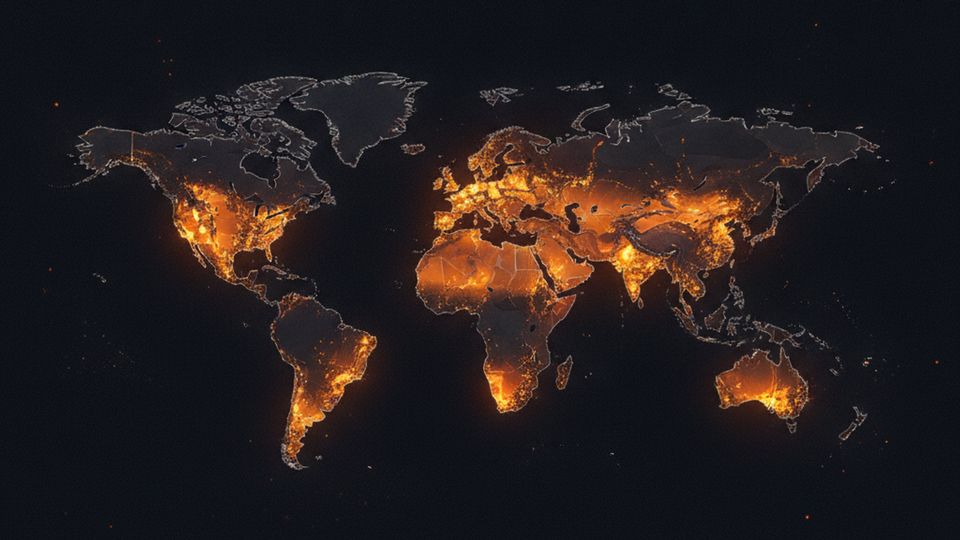
Google's developer conference circuit is retooling for agents, and the 800+ local events suggest the platform war for Web4 infrastructure just went grassroots.
The Summary
- DevFest 2026 is launching 800+ global developer events focused explicitly on "agentic AI" — Google's clearest signal yet that it's racing to own the agent development stack
- The shift from cloud-native to "agentic" as the organizing principle reveals where Google thinks the next decade of compute goes: not apps you use, but agents that work for you
- 800 events means Google is building mindshare at the local dev community level while OpenAI and Anthropic fight over enterprise deals
The Signal
Google's DevFest returning with "agentic AI" as the theme isn't just conference marketing. It's a declaration that the company sees agent development as the new battleground and wants to own the toolchain before the market even understands what it needs.
The "build, secure, and scale" framing is telling. Google's not selling you on whether agents matter. They're assuming you're already building them and positioning their infrastructure as the obvious substrate. This is the same playbook that made AWS synonymous with cloud in 2008.
"800+ global events means Google is seeding agent development culture in every tech hub simultaneously."
But here's what matters more than the event count:
- Google has Gemini models, Vertex AI agent orchestration, and now Cloud Run for agent deployment
- They're betting developers want integrated tooling more than they want model flexibility
- The "secure" emphasis suggests Google thinks agent security will be the enterprise unlock — and they want to own that narrative before the first major agent exploit makes headlines
The timing isn't random. OpenAI is laser-focused on ChatGPT as consumer product. Anthropic is chasing enterprise safety credentials. Google's strategy is different: make it trivially easy for the 28 million developers worldwide to spin up agents on Google infrastructure, then lock in the stack as agents proliferate.
This is infrastructure-as-destiny. Whoever makes agent development feel native and obvious wins the next platform cycle. Google learned from losing mobile to Apple's developer ecosystem. They're not making that mistake with Web4.
The Implication
If you're building agents, the subtext is clear: Google wants to be your compute layer, your model provider, and your deployment platform. The 800-event push is about making that feel inevitable. For developers, it's worth experimenting with Google's agent tooling now — not because it's necessarily best-in-class, but because mindshare compounds. The frameworks that feel familiar in 2026 will be defaults in 2028.
For everyone else, watch where the developer energy flows. Conference momentum is a leading indicator. If Google successfully captures the agent developer narrative this fall, we'll see it in platform adoption metrics by Q1 2027.