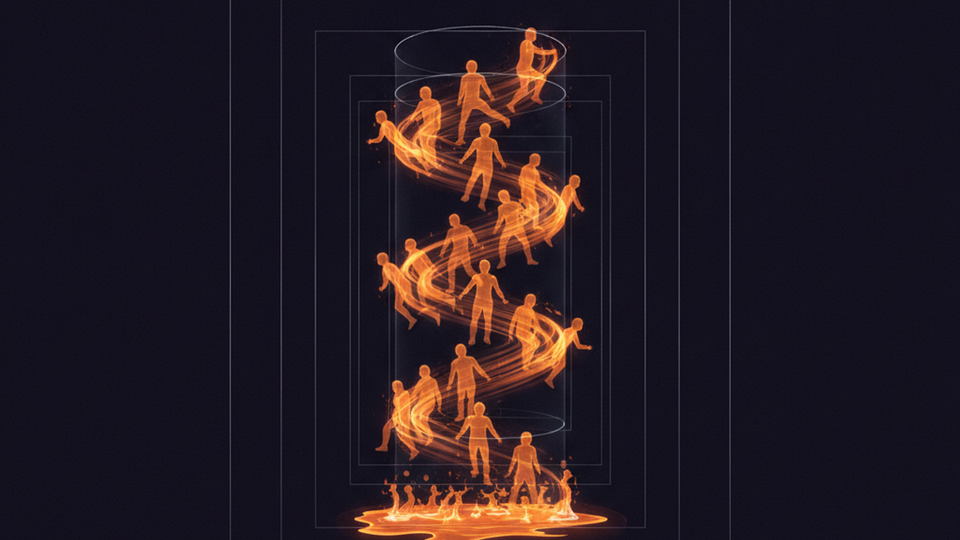
The fundraise is real, but the revenue model is borrowed from mobile games—which means Shortical isn't selling stories, it's selling user addiction at scale.
The Summary
- Israeli micro-drama app Shortical raised $100M from PvX Partners, specifically for user acquisition—the same funding model mobile gaming companies use to buy attention at industrial volume.
- Shortical jumped from 39th to 24th in US micro-drama app downloads in six months, riding a market Deloitte expects to hit $7.8B in 2026.
- The company employs 15 human screenwriters but already released "Bound by Fire," an AI-actor fantasy series, with more AI productions planned.
The Signal
Shortical's $100M raise isn't about content quality. It's about distribution physics. User-acquisition funding is what Candy Crush makers use to carpet-bomb Facebook with ads until the cost-per-install math works. You're not funding writers or cameras. You're funding algorithms that find people who'll watch 47 episodes of "Beach Volleyball Virgin" at 2am and maybe pay $4.99 to unlock the next batch.
This model works because micro-dramas solved Hollywood's actual problem: production cost. A traditional 22-minute TV episode costs $2-4 million. A micro-drama episode runs 90 seconds and costs a fraction of that, even with human actors. Now add AI-generated actors like those in "Bound by Fire," and the unit economics get absurd. You can test 50 story concepts for the price of one traditional pilot.
"When distribution costs drop to near-zero and production costs follow, content becomes inventory—and inventory at scale always beats artistry."
The tell is in Shortical's ranking jump. Going from 39th to 24th in six months doesn't happen organically in a crowded app store. That's paid acquisition doing its job. PvX Partners isn't betting on Shimoni's creative vision. They're betting on:
- Cost per install staying below lifetime value per user
- AI actors cutting production costs another 60-80%
- Micro-drama's proven conversion rates in Asia translating to US markets
Shimoni talks up the 15 human screenwriters, but that number should terrify writers, not comfort them. Fifteen people supporting an app trying to compete with ReelShort (which has 100M+ downloads) means each writer is feeding a content machine, not crafting prestige TV. The AI actor move makes it explicit: humans write the templates, machines fill the screen time.
Key production economics:
- Traditional TV episode: $2-4M, 22 minutes, months to produce
- Human-actor micro-drama: $50-200K for 30-60 episodes, weeks to produce
- AI-actor micro-drama: Estimated 40-70% cheaper than human version, faster iteration
The bigger pattern: Hollywood's vertical video pivot is confirmation that TikTok's aspect ratio won. Disney, Fox, and now a flood of VC-backed apps are all building for phone screens held upright. But only the mobile-game veterans understand that content on phones isn't consumed—it's harvested. These apps don't compete on story quality. They compete on notification timing, scroll-stopping thumbnails, and how fast they can A/B test cliffhangers.
The Implication
If you're a screenwriter, the lesson isn't that AI will replace you tomorrow. It's that the AI-plus-mobile-gaming model will crater rates by flooding the market with "good enough" content produced at 10x the volume. Shortical's 15 writers aren't writing for audiences. They're writing for algorithms optimizing watch-through rates.
For creators and studios, the question is whether you're building for scarcity or abundance. Shortical is betting on abundance—infinite shelf space, infinite testing, content as CPG. The ones who'll survive are either making work so distinct it can't be templated, or they're the ones controlling the distribution funnels where attention actually converts to dollars.