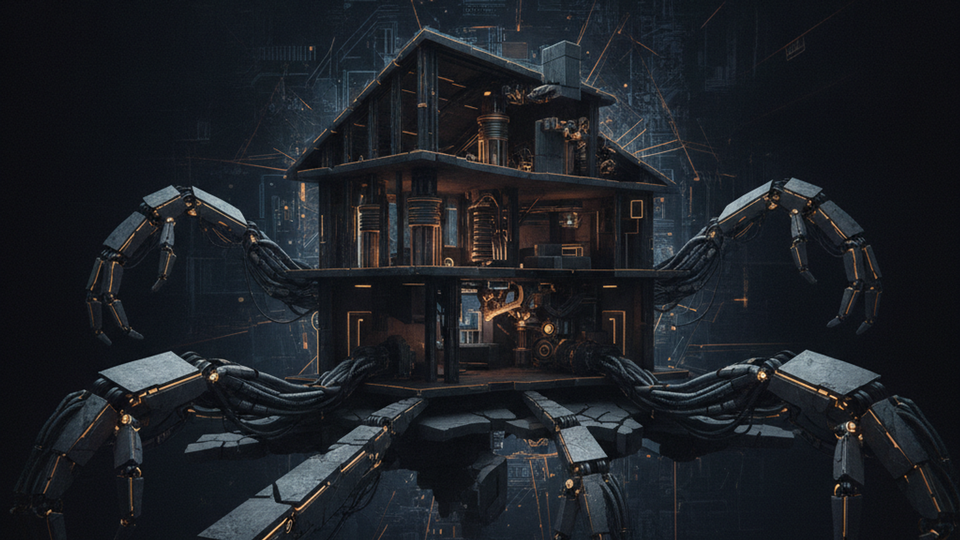
While Tesla and Figure race to put humanoids in your kitchen, one Japanese startup is asking why the robot needs legs at all.
The Summary
- Tokyo-based MW Inc. is building homes with robotic arms embedded in the walls, directly challenging the humanoid robot boom
- The architecture-as-robot approach sidesteps mobility, battery life, and the uncanny valley problems plaguing bipedal bots
- MW's bet: fixed infrastructure beats flexible form factor when the job is housework in a known space
The Signal
MW Inc.'s Iron Man-inspired home concept inverts the automation problem everyone else is solving. Instead of building a general-purpose robot that moves through human spaces, they're building the space itself into the robot. Robotic arms emerge from walls and ceilings to handle dishes, laundry, cleaning. The arms know exactly where everything is because they're part of the structure.
This is strategic simplicity. Humanoid companies are burning billions to solve locomotion, balance, and real-time spatial mapping. MW eliminates all three by making the environment the agent.
"The most expensive parts of a humanoid are the parts that let it walk around and pick things up. MW just bolted those parts to the ceiling."
The core technical advantages:
- No battery anxiety when the arms plug directly into mains power
- No navigation complexity when position is fixed and the space is mapped at installation
- No form factor compromise between strength and human-safe design
The humanoid race assumes we need robots that look like us because our homes are built for us. MW flips it: build homes for robots, then humans get to live in a place that takes care of itself. It's the smart home taken to its logical endpoint. Your house doesn't just respond to voice commands. It does the work.
The market timing matters. Humanoid hype is at an all-time high, with Tesla, Figure, 1X, and a dozen Chinese startups promising $20,000 home robots within three years. But none have shipped at scale. None have proven they can navigate a messy house, manipulate fragile objects, and run for eight hours on a charge. MW's approach skips the hardest problems by redesigning the problem space itself.
The Implication
If MW gains traction, it forces a question the humanoid builders don't want to answer: are we building robots for humans, or are we building them because they look like us? The embedded-arm home costs more upfront but sidesteps the maintenance, charging, and software update headaches of a mobile bot. That trade-off works for new construction in aging societies like Japan, where elder care and labor shortages make automation essential.
Watch for hybrid approaches. First movers in modular housing could integrate MW-style arms as standard features. If one major builder adopts this, humanoid makers will need to prove their bots deliver value beyond novelty. The winner isn't the most human-like robot. It's the one that actually folds your laundry.