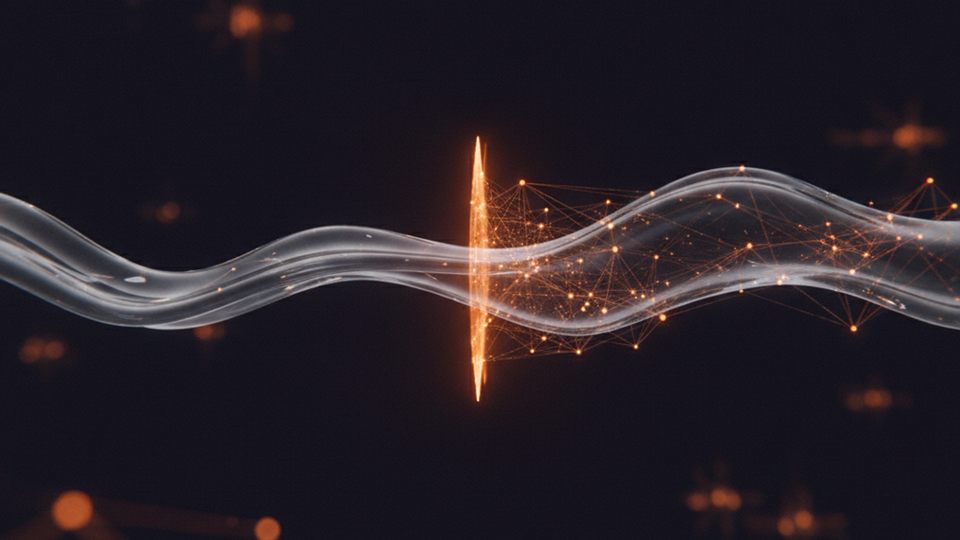
The invisible tension at the core of Web4: if your agent has to signal its work to regulators, can it still optimize for you?
The Summary
- Anthropic is adding watermarks to Claude's text outputs to comply with new EU AI rules, triggering backlash from users who say it compromises output quality
- Tech blogger John Gruber called the watermark a "perversion of writing," arguing that word choice should optimize for user needs, not regulatory detection
- Some Claude users have canceled subscriptions over the change, though Anthropic reports no spike in cancellations
- Anthropic maintains the watermark won't affect writing clarity, but the technical details remain opaque
The Signal
Anthropic is embedding watermarks into Claude's text generation to meet European Union AI Act requirements. The watermark subtly biases word selection during generation, making AI-written text statistically detectable without degrading human readability, according to the company. But the implementation details matter, and they're sparking a fight about whose interests generative AI should serve first.
Gruber's argument cuts to the bone. He wrote on Daring Fireball that he wants "any LLM I use to choose the very best, most precise words at every single decision point," not words selected to satisfy detection algorithms. His framing of this as "patently offensive" isn't hyperbole for someone who's built a career on word precision. It's a fundamental disagreement about whether AI writing tools work for the person using them or the regulators watching them.
"The exact words we choose when writing matter."
The watermark works by introducing subtle statistical patterns into token selection. When Claude generates text, it occasionally picks a slightly less optimal word, creating a signature that detection tools can recognize. Anthropic insists these changes don't affect clarity or quality, but that claim assumes the distance between "optimal" and "nearly optimal" is always negligible. For technical writing, legal documents, or code, that assumption breaks down fast.
The confusion around what the watermark actually does has amplified user concern. Anthropic has published blog posts explaining the technology, but the gap between "we're making minor adjustments" and "we're fundamentally changing how your agent chooses words" feels like semantic sleight of hand to critics. Users report canceling subscriptions over the change, even as Anthropic told Business Insider it hasn't seen a cancellation spike.
Key tensions:
- Regulatory compliance versus user optimization
- Detectability versus performance
- Corporate transparency versus user trust
This isn't just about Claude. It's a preview of every conflict coming as AI agents become more capable. If your agent's job is to negotiate contracts, write code, or manage your calendar, every decision it makes should maximize your outcome. The moment it starts optimizing for someone else's objectives (even regulatory ones), the principal-agent problem gets messy. You think your agent works for you. The watermark says it also works for Brussels.
The Implication
Watch how other frontier labs respond. If OpenAI, Google, and others implement similar watermarking to access European markets, the cost-benefit calculation shifts. Users won't be able to opt out by switching providers. That's when the real pressure builds: either demand unwatermarked alternatives (which will exist, legally or not) or accept that your AI tools serve two masters.
For companies building agent infrastructure, this is the canary. If agents can't fully optimize for their principals because they're embedding compliance signals into every output, trust erodes. The promise of Web4 is that agents work for you, not platforms, not regulators. Watermarking might be a minor technical tax today. But it sets a precedent that every agent decision is potentially subject to external constraints beyond user intent.