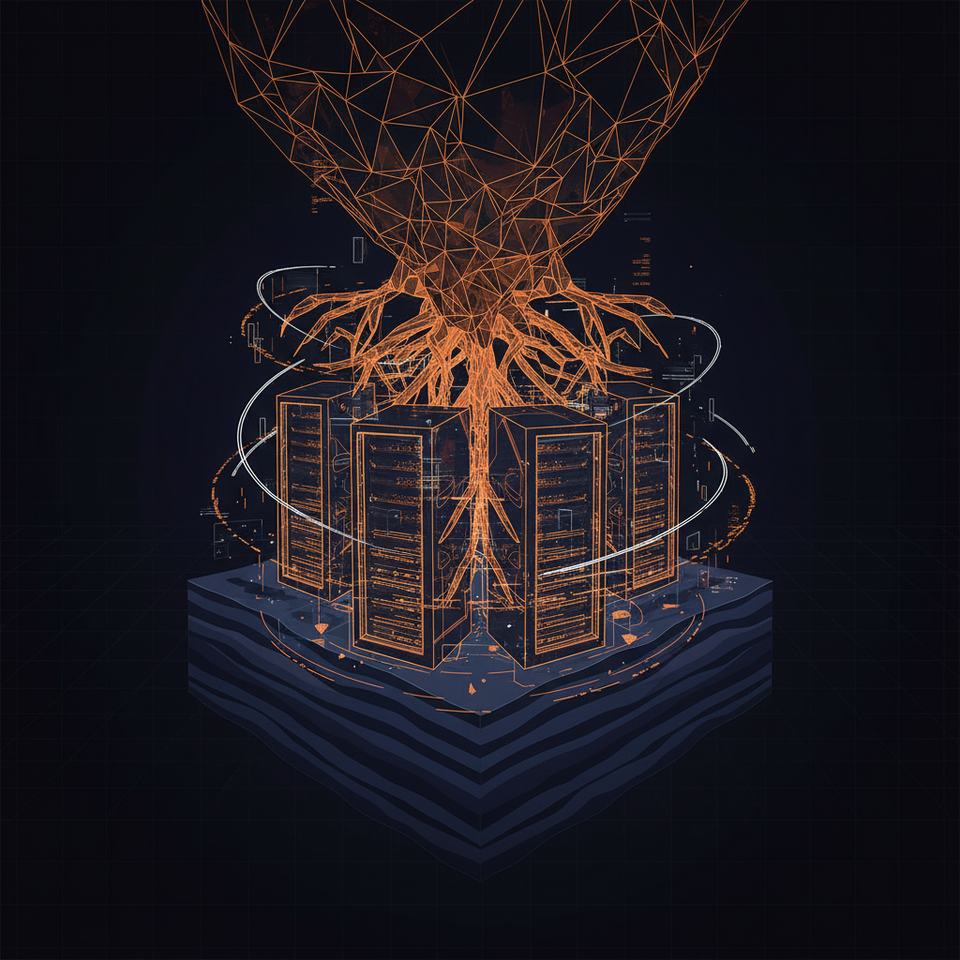
The AI land grab just hit a wall in Kentucky, and the price tag was $26 million.
The Summary
- A major AI company offered a Kentucky family $26 million to convert their farm into a data center. They said no.
- This isn't about money anymore. It's about what we're willing to sacrifice to feed the compute monster.
- The Agent Economy needs land, power, and cooling. Turns out not everything has a price.
The Signal
Somewhere in Kentucky, an AI company you've heard of wrote a check for $26 million to turn farmland into a data center. The family turned it down. That's the entire story, and it tells you everything about where we are in 2026.
Data centers are the new oil refineries. Every AI lab scaling to AGI needs massive compute infrastructure, and that means land with power access and water for cooling. Rural America has both, cheap. What it also has: people who've worked the same soil for generations and aren't impressed by Silicon Valley money.
This rejection matters because it's a preview. AI companies are going to keep knocking on doors with bigger checks. Some families will take the deal. Others won't. The Agent Economy requires physical infrastructure at a scale most people don't yet grasp. Training runs for frontier models pull megawatts for months. Inference at scale never stops. That infrastructure has to go somewhere, and "somewhere" is increasingly someone's backyard, someone's view, someone's legacy.
The interesting question isn't why one family said no. It's how many more offers are out there, who's saying yes, and what happens to the communities that become compute colonies.
The Implication
If you own rural land near power lines or substations, expect calls. If you live in a community that might host a data center, start asking questions now about water use, power grid impact, and what happens when the tax incentives expire. The AI infrastructure buildout is real, it's accelerating, and it's coming to places that thought tech was something that happened elsewhere. Not every acre is for sale, but enough of them will be.
Sources: TechCrunch AI | TechCrunch AI