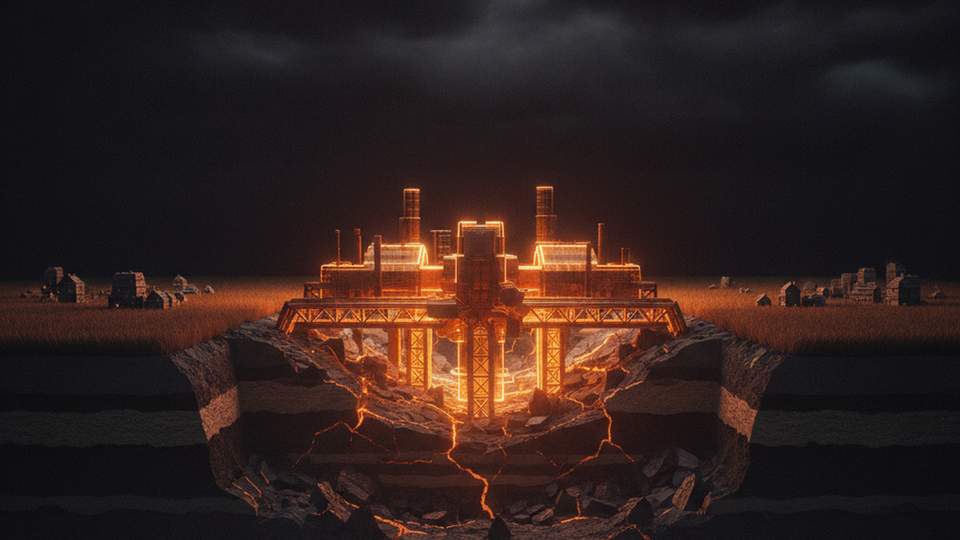
The physical infrastructure of AI isn't just data centers and power lines — it's mobile home parks and the people willing to move for the work.
The Summary
- Meta is building a $50 billion data center in Holly Ridge, Louisiana, an unincorporated community of fewer than 2,000 residents that will soon host 7,500 construction workers at peak build
- The local housing gap has triggered a boom in workforce housing, including mobile home parks like Antley Pines, turning a sleepy farming parish into a construction boomtown overnight
- This is what the agent economy looks like on the ground: not Silicon Valley campuses, but rural communities absorbing thousands of workers building the compute infrastructure that will train the models that will automate millions of jobs
The Signal
For decades, Richland Parish in northeast Louisiana was the kind of place where everybody knew everybody. Farming country. Winding back roads. A skyline free of towers. The closest city of any size was Monroe, 30 minutes west. Then Meta announced its largest data center to date in December 2024, and the parish became ground zero for AI infrastructure buildout.
The numbers are staggering for a place this small. Holly Ridge has fewer than 2,000 residents. Meta's Hyperion data center will bring 7,500 trade workers at peak construction and 1,000 operational jobs to the area. The workers outnumber the locals nearly four to one.
"The workers outnumber the locals nearly four to one. This isn't gentrification. This is industrial transformation."
Where do 7,500 construction workers live when they descend on a community of 2,000? Mobile home parks. Workforce housing. Angel Crawford from nearby Delhi noticed the surge first, according to the reporting. Developers are racing to build capacity. Antley Pines and other parks are filling up with welders, electricians, concrete workers, the people who build the buildings that house the servers that train the models.
This is the forgotten middle layer of the AI stack. We talk about frontier models and inference costs and agent frameworks. We don't talk about the electricians pulling 12-hour shifts in Louisiana heat to wire the transformers that will power the GPUs. We don't talk about the housing crisis in towns that didn't exist on most maps until a hyperscaler decided they had cheap land and proximity to power.
Key infrastructure realities:
- $50 billion investment over multiple years in a single parish
- 1,000 permanent operational jobs after construction wraps
- Mobile home parks as the primary housing solution for thousands of skilled trades workers
The irony is thick. Meta is building the compute infrastructure to train models that will eventually automate significant chunks of knowledge work. The people building that infrastructure are doing physical, skilled labor that is much harder to automate. They're the ones who showed up, moved to Holly Ridge, and got their hands dirty. Meanwhile, the knowledge workers those models will replace are working remotely from cities with real housing stock.
The Implication
Watch where the hyperscalers build next. Every major AI data center announcement is a preview of which small communities will experience this kind of shock. The construction jobs are real and they pay, but they're temporary. The 1,000 operational jobs that remain are the actual long-term bet.
For workers, the calculus is straightforward: if you can wire a data center, you have work for the next decade. The AI buildout is a physical infrastructure play before it's anything else. The models need compute. Compute needs buildings, power, cooling. Buildings need skilled trades. If you're trying to figure out where human labor fits in the agent economy, start with the people making the agent economy physically possible.