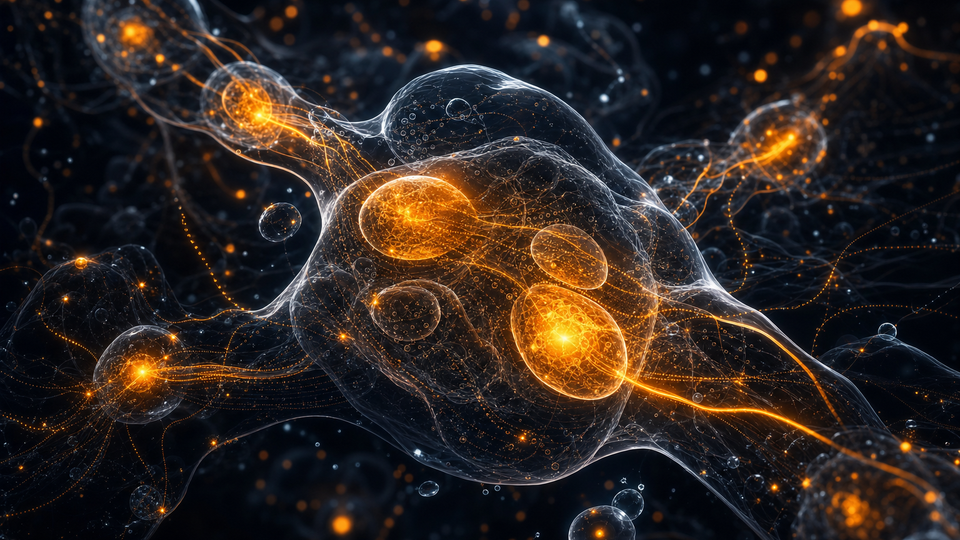
While everyone else trains AI on pixels and text, one Parker protégé is feeding it living tissue — and the implications reach far beyond face cream.
The Summary
- Michael Polansky's stealth startup keeps human skin alive outside the body for weeks, training AI models on living tissue responses to discover novel skincare compounds
- This isn't cosmetics innovation, it's biotech infrastructure: real-time biological data generation at scale
- The play: replace animal testing and synthetic models with human-equivalent training data that AI can actually learn from
The Signal
Polansky spent years at Founders Fund and the Parker Institute for Cancer Immunotherapy before this. That pedigree matters. The startup has been operating in stealth mode, which means he wasn't chasing hype cycles or demo days. He was solving a hard biological problem: how do you keep human tissue alive long enough to generate meaningful data, and what do you do with that data once you have it.
The answer is an AI training loop most researchers can't access. Animal models are biological approximations. Synthetic skin is closer but still limited. Living human skin that responds, ages, and reacts over weeks gives you ground truth. Every compound tested generates real biological signal. Every response becomes training data for models that can start predicting which molecular structures will work before you ever synthesize them.
"This is the biotech equivalent of Github Copilot: AI trained on real execution, not documentation."
Here's why this matters beyond skincare. The regulatory pathway for cosmetics is faster and cheaper than drugs. But the infrastructure Polansky is building scales to pharmaceuticals, wound healing, aging research, and eventually personalized medicine. If you can keep skin alive and responsive, you can test patient-specific tissue against thousands of compounds in parallel. The AI learns what works for different genetic profiles, skin types, ages.
The economic model shifts too:
- Traditional pharma burns years and billions on compounds that fail in human trials
- This approach fails earlier, cheaper, on actual human tissue
- AI compounds learning loops, suggesting modifications before wet lab work begins
The data moat here is biological, not digital. You can scrape the internet. You can't scrape living tissue responses. Whoever builds the largest library of human tissue reactions to molecular compounds owns the training set for the next generation of drug discovery AI. Polansky has been building this library for years while everyone else argued about LLM context windows.
The Implication
Watch for more stealth biotech AI plays emerging in 2026. The pattern: find a domain where biological ground truth is scarce, expensive, or ethically constrained. Build infrastructure to generate that truth at scale. Train models no one else can replicate. This is how Web4 eats biotech, one tissue type at a time.
If you're in materials science, drug discovery, or anything that currently relies on animal models or slow human trials, this is your roadmap. The agents that will optimize molecular structures need training data from reality, not simulations.