Google just turned your research notes into animated explainer videos, and nobody's talking about what this means for the last defense of human knowledge work.
The Signal
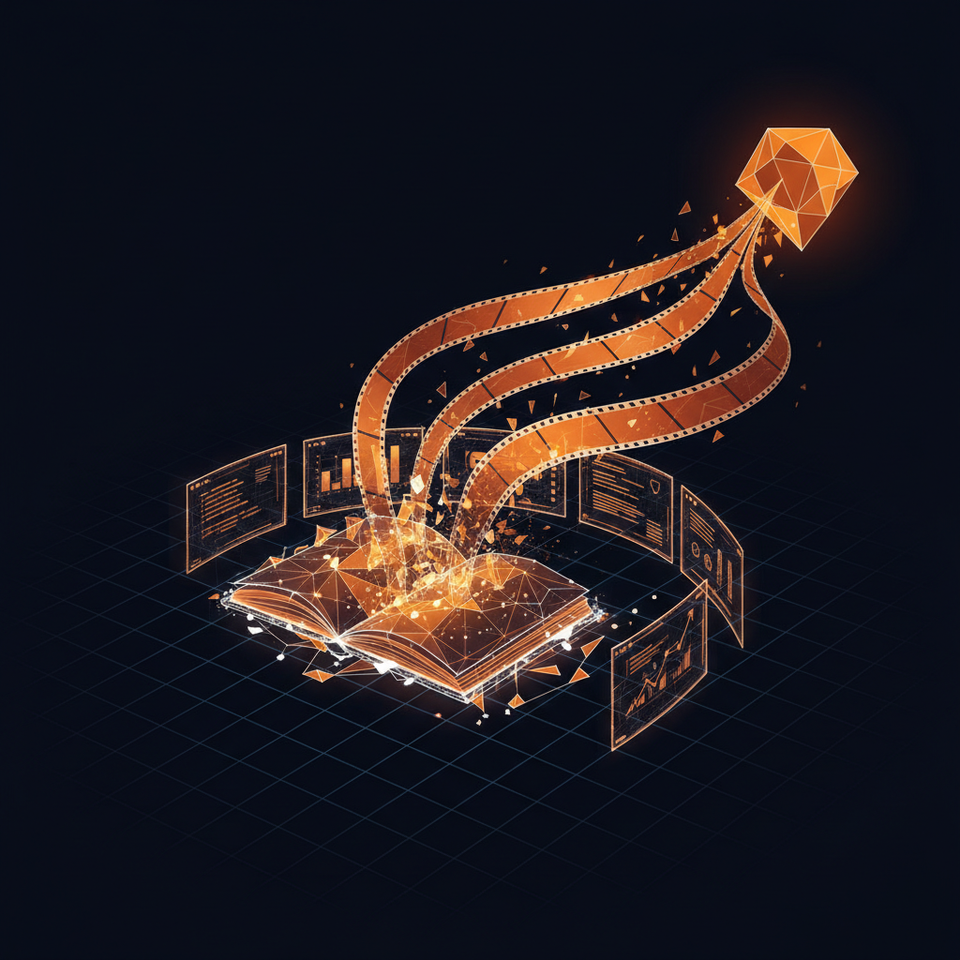
NotebookLM's jump from slideshow narration to full animation isn't just a feature update. It's Google stacking three models (Gemini 3, Nano Banana Pro, Veo 3) to automate the entire pipeline from research synthesis to visual storytelling. The model decides narrative structure, picks visual style, generates animations, then critiques and refines its own output. That last part matters. Self-correction used to be the moat around creative work. Now it's a bullet point in a product release.
The original Audio Overview feature already proved people would trust AI to synthesize their research into podcast-style summaries. Millions of downloads later, Google learned that humans want their thinking packaged back to them in consumable formats. Now they're going visual because that's where attention lives. But watch the compound effect: you feed in raw notes, the system structures an argument, scripts narration, generates visuals, and quality-checks itself. Each step used to be a separate job. Researcher, writer, designer, producer, editor. Now it's one prompt.
This isn't about making better presentations. It's about collapsing the distance between having information and having a polished media artifact. When that distance hits zero, what's left for the human in the loop? The research itself, maybe. For now.
The Implication
If you're in any business that transforms raw information into narrative products (consulting decks, training videos, market reports, educational content), your timeline just shortened. The question isn't whether AI can do this work. It's whether clients will pay human rates when AI delivers 80% quality in 5% of the time. Start thinking about what you offer beyond synthesis and packaging. That's commodity now.
Source: The Verge AI