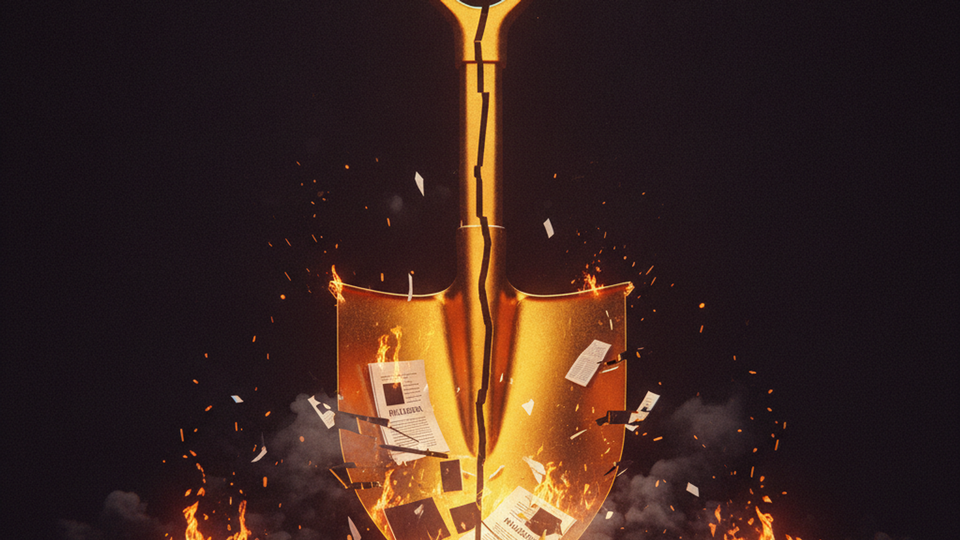
The man who sold the shovels for the AI gold rush just told Congress to put down the rulebook.
The Summary
- Nvidia CEO Jensen Huang told policymakers Tuesday that AI doesn't need new regulations, arguing market forces and existing engineering practices can ensure safety
- Huang reframed AI as "just hardware and software" rather than an "alien mind", suggesting safety should be left to product makers
- The timing matters: Nvidia's $3 trillion market cap sits on top of an AI infrastructure boom where regulation could reshape profit margins overnight
The Signal
Jensen Huang is making a calculation. His core argument is that AI is engineering, not alchemy, and engineers have been making safety calls on complex systems for decades without Congress writing specifications. It's the same logic chip makers used in the 1980s, automakers used in the 1950s, and chemical companies used before Love Canal. Sometimes it works. Sometimes it doesn't.
The "market forces" framing Bloomberg captured is doing heavy lifting here. Huang is betting that competitive pressure will force companies to build safe AI because customers will demand it. That works if customers can evaluate AI safety, if failures are visible before they're catastrophic, and if market share moves faster than systemic risk. None of those conditions held for social media algorithms, and those were simpler than what's coming.
"AI isn't some kind of new form of alien mind — it's just hardware and software."
The counter-narrative Huang is fighting: AI as fundamentally different, requiring new institutional guardrails. The AI safety community talks about alignment problems, mesa-optimizers, deceptive agents. Huang talks about engineering tolerances. Both can't be right, or more precisely, both can't be right at the same time.
Key context most coverage missed:
- Nvidia doesn't build end-user AI products. They sell picks and shovels.
- Regulation usually lands on product makers (OpenAI, Anthropic, Meta) not infrastructure suppliers.
- Huang's incentive is velocity. Every regulatory pause is quarters of delayed chip orders.
Here's the tell: Huang frames AI safety as something "each AI product maker" can engineer independently. That only works if AI risk is local, not systemic. If a buggy model makes bad loan decisions, that's local. If coordinated AI agents destabilize labor markets or automate social engineering at scale, that's systemic. The first doesn't need new laws. The second might.
The timing also tells you something. This statement comes as Washington is actively drafting AI governance frameworks and the EU's AI Act enforcement kicks into high gear. Huang isn't responding to abstract policy debates. He's watching his customers navigate compliance costs and wondering if those costs will throttle demand for H100s and Blackwell chips.
The Implication
Watch what Nvidia does, not what Huang says. If they start building safety features into their AI infrastructure stack, that's a tell that market pressure is real. If they don't, the "leave it to us" line was about protecting quarterly revenue, not about engineering confidence.
For anyone building agent systems: the regulatory vacuum won't last. The question isn't whether rules come, but whether they're written by people who understand the tech or people who are just scared of it. Huang is gambling that industry can move fast enough to make sensible self-regulation credible. History says that gamble usually loses, but the house takes a while to call it.