When the GPU king gives his blessing to a chip merger, he's not being polite—he's orchestrating the supply chain for an agent economy that doesn't exist yet.
The Summary
- Marvell and Lumentum sought Nvidia CEO Jensen Huang's approval before finalizing their $103 billion merger, making him de facto kingmaker in AI infrastructure deals
- The merger combines Marvell's custom chip design with Lumentum's optical networking tech—both critical for AI data center buildout
- Huang's blessing signals Nvidia is curating its entire supply chain ecosystem, not just selling GPUs
The Signal
Jensen Huang doesn't do courtesy calls. When the heads of Marvell and Lumentum flew to get his approval on a $103 billion merger, they weren't asking permission—they were getting their business model validated by the only person who knows what AI infrastructure will look like in 2027.
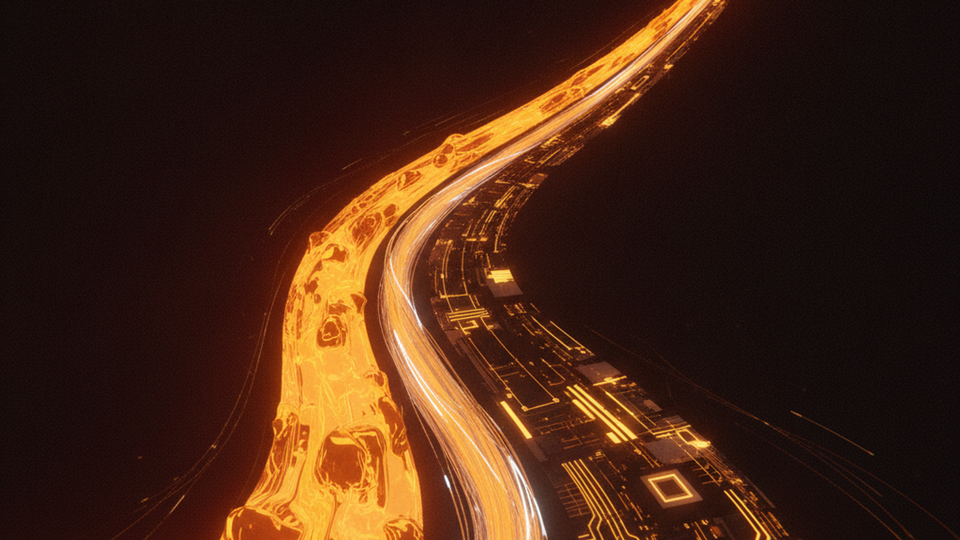
Marvell designs custom silicon for cloud hyperscalers. Lumentum builds the optical transceivers that move data between servers at light speed. Put them together and you get the connective tissue for AI training clusters that are growing faster than anyone can build them. Nvidia needs this merger to work because GPUs are useless without the infrastructure to feed them data and pipe out results.
"The GPU is the brain, but optical networking is the nervous system—and custom chips are the organs doing specialized work."
This is Huang playing 3D chess with the entire semiconductor industry. Three things stand out:
- Nvidia becomes the informal architect of AI infrastructure M&A
- Custom chip design gets married to physical layer networking—the full stack
- Huang's endorsement probably smoothed regulatory concerns before they surfaced
The timing matters. AI agents don't just need compute—they need low-latency networking to coordinate across distributed systems. When an autonomous system is managing supply chains or trading markets in real-time, milliseconds kill profitability. Marvell-Lumentum solves for that. They're building the highways for agent-to-agent communication at scale.
What's wild is how much power this gives Huang without owning equity. He's not buying these companies. He's just making sure they fit into the world Nvidia is building. It's the Andrew Carnegie playbook: control the inputs, let others compete on the outputs, collect rent on the entire value chain.
The Implication
If you're building AI infrastructure, you now have a North Star for what matters: custom silicon plus optical networking. Huang just told the market these are the two non-negotiable layers below the GPU. Watch for more consolidation in this space—and expect Nvidia's unofficial approval to become a formal part of semiconductor deal-making.
For investors, this is a signal that the AI buildout is entering phase two. Phase one was buying GPUs. Phase two is building the nervous system that makes those GPUs useful at population scale. The companies that own that layer will print money for the next decade.