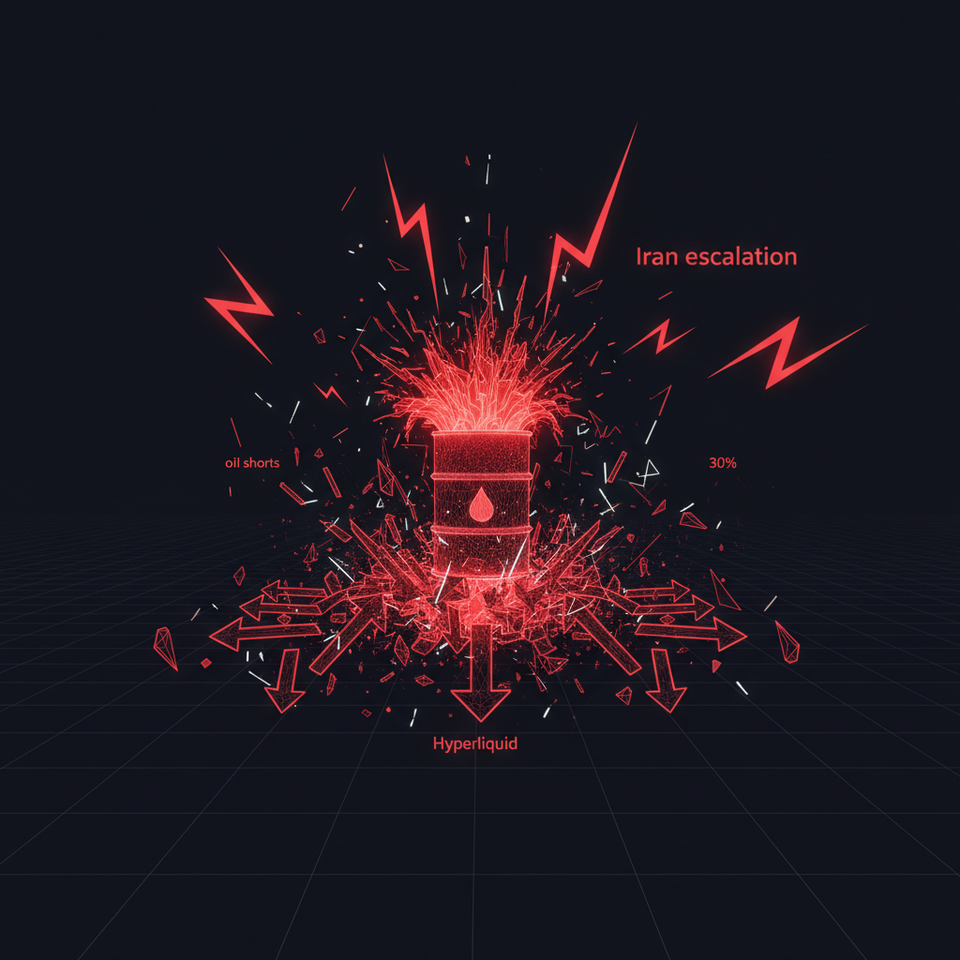
Tokenized oil futures just had their first real stress test, and $40 million in crypto positions evaporated in hours.
The Signal
Hyperliquid, the decentralized perpetuals exchange, got hammered when crude oil spiked 30% on Iran escalation news that spread to Saudi production facilities. Traders shorting tokenized oil futures saw $40 million in liquidations, the largest wipeout yet for real-world asset derivatives on crypto rails.
This matters because it's the first time tokenized commodity futures faced true geopolitical volatility at scale. Not a Fed announcement or earnings miss. Actual supply shock, the kind that's been moving oil markets for fifty years. And the on-chain infrastructure handled it exactly like traditional venues: leverage got crushed, positions unwound fast, and the people betting wrong lost their shirts.
The mechanics are telling. These weren't synthetic products or oracle-fed approximations. Hyperliquid's oil perpetuals track real crude prices through a combination of oracle feeds and market-making activity. When physical oil spiked, the digital version moved in lockstep. No lag, no decoupling, no "blockchain can't handle real markets" moment. It just liquidated shorts with the same ruthless efficiency as CME or ICE would.
What's new: this all happened on a decentralized venue with no KYC, no trading hours, and global access. A trader in Lagos had the same liquidation experience as one in London. That's the promise of RWA tokenization, delivered under fire.
The Implication
Watch how traditional commodity traders respond. If tokenized futures can handle a 30% crude spike without breaking, they can handle most anything. The infrastructure just proved it's ready for grown-up money. Expect more institutional flow into on-chain commodity markets, especially from players who want 24/7 access without dealing with legacy infrastructure. The rails work. Now comes the volume.
Source: CoinDesk