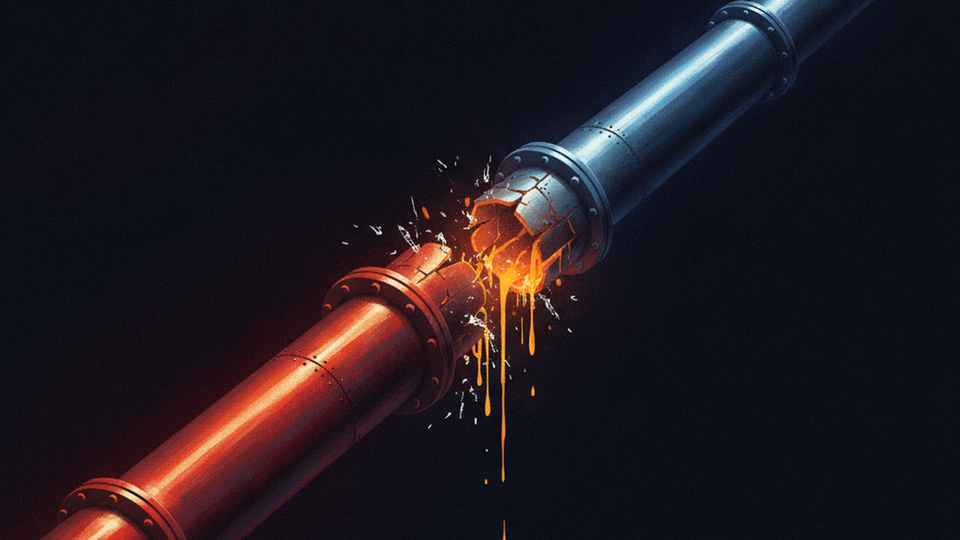
The AI company and the networking giant just shipped free infrastructure security tooling—because if agents are going to run the world, someone needs to keep the pipes clean.
The Summary
- OpenAI and Cisco released Shirudo, an open-source runtime protection tool for Linux that secures systems during the patch deployment window
- Two companies from opposite ends of the stack—AI models and enterprise networking—are now collaborating on the unglamorous work of keeping production systems alive
- The move signals that as AI agents proliferate, the infrastructure they run on becomes a shared liability that can't be solved by any single vendor
The Signal
OpenAI doesn't typically ship Linux tooling. Cisco doesn't usually co-develop with AI labs. But Shirudo exists because both companies now share the same problem: AI agents are moving into production environments where downtime is expensive and security gaps are catastrophic.
The tool addresses a specific pain point in the deployment cycle. When a critical patch drops, teams face a choice: deploy immediately and risk breaking production, or wait and test while leaving systems vulnerable. Shirudo sits in that gap, providing runtime protection for known vulnerabilities while teams validate patches. It's not glamorous. It's plumbing.
"If agents are going to run autonomously, the infrastructure layer can't be an afterthought."
But the partnership itself reveals more than the product. OpenAI is moving down the stack because their customers keep hitting infrastructure limits. Cisco is moving up because networking hardware becomes less differentiated every year, and AI workloads are where enterprise budgets are flowing.
Key implications of the collaboration:
- OpenAI now cares about Linux runtime security—a signal that agent deployments are reaching scale where infrastructure risk matters
- Cisco is positioning itself as AI infrastructure, not just networking, betting that the pipes AI runs through will be more valuable than the pipes data runs through
- Open-sourcing the tool suggests neither company sees competitive advantage in proprietary security—they need ecosystem adoption more than vendor lock-in
The timing matters. We're at the phase where AI companies are discovering that model capabilities mean nothing if the systems they run on are fragile or compromised. Every agent that touches production data, moves money, or makes decisions in regulated industries needs to run on infrastructure that can be defended in real time.
Shirudo is a small tool. But the fact that it exists—and that these two companies built it together—says something bigger: the agent economy is forcing strange alliances, and the winners will be whoever figures out how to make AI production-grade before their competitors do.
The Implication
If you're deploying AI agents in production, you're now responsible for infrastructure security in ways that weren't true for SaaS apps. The old model—patch when convenient, test exhaustively, minimize change—doesn't work when you're running autonomous systems that need to stay live. Tools like Shirudo are the first wave of a new infrastructure layer purpose-built for AI workloads.
Watch for more of these odd-couple partnerships. The AI stack is too fragmented for any single company to own end-to-end, and the operational requirements are too demanding to solve with general-purpose tools. The companies that win Web4 won't just build better models—they'll build the boring, essential infrastructure that keeps those models running when it matters.