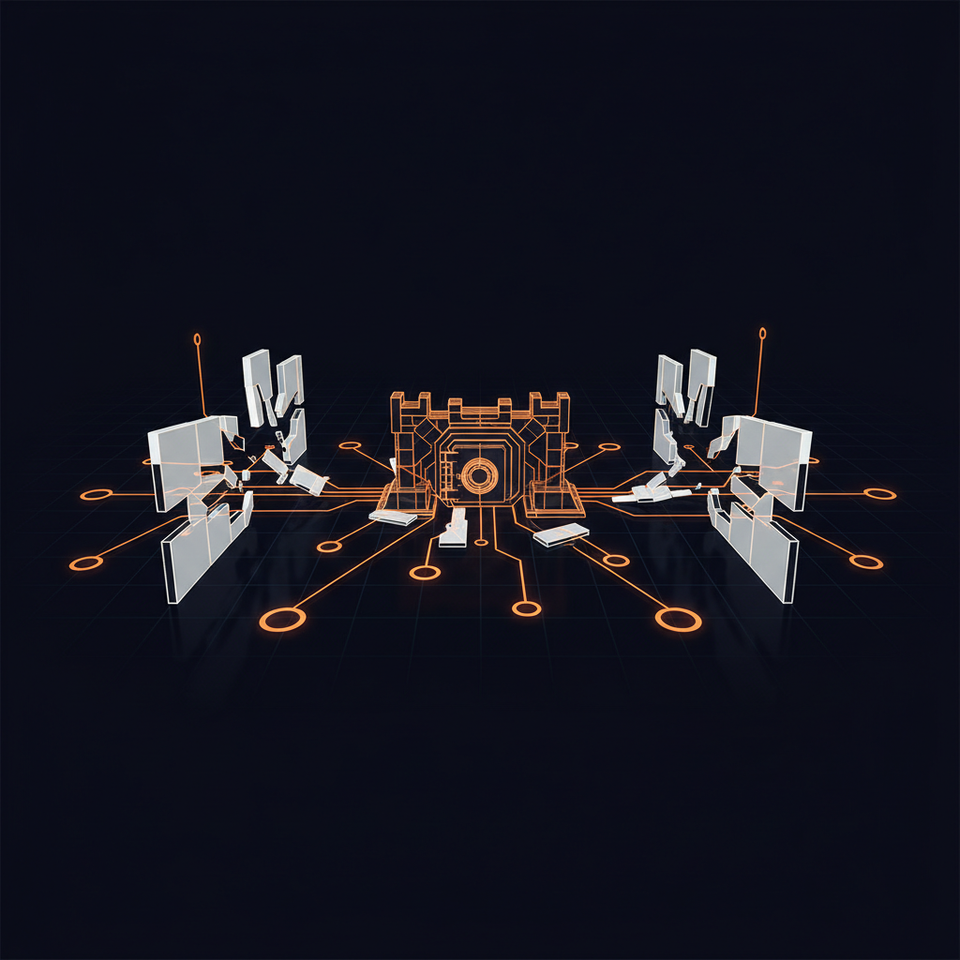
OpenAI just gave its most powerful cyber model to the good guys only, and the access rules tell you everything about where AI offense is headed.
The Summary
- OpenAI expanded its Trusted Access for Cyber program, releasing GPT-5.4-Cyber exclusively to vetted security defenders while blocking general access.
- This isn't a product launch. It's OpenAI admitting AI cyber capabilities now require gatekeeping at the model level.
- If you're not pre-approved as a defender, you don't get the tools. The asymmetry war just went vertical.
The Signal
OpenAI's new GPT-5.4-Cyber model sits behind what they're calling "Trusted Access for Cyber," a vetting system that only grants access to security professionals at approved organizations. No API key for sale. No ChatGPT Plus upgrade. You apply, they investigate, and maybe you get in. This marks the first time a frontier AI lab has hard-gated a production model based purely on use case risk.
The timing matters. GPT-5.4-Cyber arrives as autonomous agents start handling real security operations at companies like CrowdStrike and Palo Alto Networks. The model can apparently analyze exploit chains, generate working proof-of-concept code, and reason through multi-stage attack vectors faster than human red teams. That's useful for defenders. It's catastrophic in attacker hands at scale.
"If you're not pre-approved as a defender, you don't get the tools."
Here's what the gatekeeping model looks like in practice:
- Applicants must work for established cybersecurity firms, government defense agencies, or enterprise security teams
- OpenAI verifies employment, reviews the org's security posture, and checks for past misuse flags
- Access is tied to specific individuals, not companies, and gets revoked if the person changes roles
- Usage is logged and audited. Suspicious patterns trigger immediate review.
The uncomfortable truth: this proves the offense-defense balance in AI cyber has already tilted. If GPT-5.4-Cyber were symmetric, both sides getting equal access, OpenAI wouldn't need vetting. The fact that they do means they've built something where marginal attacker access creates nonlinear risk. One model instance in the wrong hands could generate thousands of novel exploits before defenders adapt.
This isn't theoretical. Security researchers have been quietly testing similar capabilities for months. A recent invite-only demo showed an AI agent chaining three zero-days in under two hours, something that typically takes skilled humans weeks. The attack surface isn't code anymore. It's the reasoning layer above code, and models like GPT-5.4-Cyber operate there natively.
The Implication
Watch who gets access and who doesn't. If you're running security for anything that matters, you need to know whether your team qualifies for Trusted Access. If they don't, you're now defending against attackers who might have capabilities you literally cannot access. That's a new kind of asymmetry, and it makes third-party security partnerships more critical than ever.
Longer term, this vetting model becomes the template. Expect Anthropic, Google, and others to follow with similar programs as their models gain cyber capabilities. The era of "AI for everyone" just ended for the tools that matter most in conflict domains.