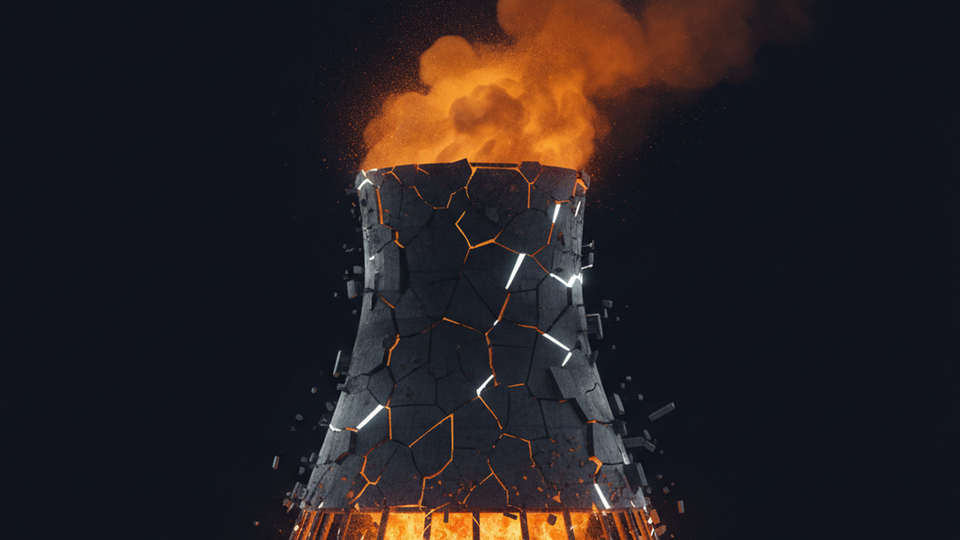
When your business model burns gigawatts and locals are starting to notice, a fresh coat of paint on the sign won't help.
The Summary
- OpenAI is reportedly considering rebranding its data centers as "AI compute campuses" amid growing community opposition to power-hungry infrastructure
- The semantic shuffle comes as AI companies face mounting resistance over energy consumption and local resource strain
- This is marketing theater while the real issue — infrastructure costs for the agent economy — remains unsolved
The Signal
Data centers have a PR problem because they have an actual problem. They pull massive amounts of electricity, strain local water supplies for cooling, and contribute almost nothing to the communities they occupy beyond property tax revenue and a handful of security guard jobs. OpenAI's potential rebrand doesn't change any of that math.
The term "campus" is doing heavy rhetorical lifting here. Campuses suggest collaboration, learning, human activity. What OpenAI actually operates are windowless warehouses packed with GPUs running hot enough to fry an egg. Calling it a campus is like calling a coal mine a "geological resource university."
"Rebranding infrastructure doesn't reduce its footprint — it just makes the backlash more awkward when it arrives."
Here's what's really happening:
- AI training and inference demands are growing exponentially faster than energy grid capacity
- Communities from Arizona to Ireland are blocking new data center construction over power and water concerns
- OpenAI and competitors are racing to secure compute before local governments shut the door
The agent economy requires compute infrastructure at a scale most people don't grasp yet. GPT-4 level models already consume megawatt-hours per training run. The next generation of multi-modal agents that can actually replace knowledge work? They'll need orders of magnitude more. This isn't a marketing problem. It's a physics problem dressed up in a comms strategy.
Key infrastructure realities:
- A single large AI data center can consume as much power as 100,000 homes
- Water usage for cooling can reach millions of gallons daily in arid regions
- The buildout timeline from permits to operation runs 2-5 years minimum
The "campus" rebrand might buy OpenAI a few extra months of goodwill in permitting hearings. But it doesn't address the fundamental tension: the companies building Web4 need massive amounts of energy right now, and the physical infrastructure to deliver it cleanly doesn't exist yet. Coal plants are being kept online to power AI training. Natural gas is filling the gap. The renewable energy needed to make this sustainable is years behind the curve.
This matters because the agent economy isn't optional infrastructure like, say, crypto mining farms that can throttle down or relocate. If you believe agents will handle significant chunks of future knowledge work, then compute infrastructure becomes as critical as highways or broadband. You can't run an economy on agents if the servers that host them get shut down by angry city councils.
The Implication
Watch how AI companies handle community relations in the next 12 months. The ones that figure out genuine energy partnerships and local benefit sharing will secure the compute they need. The ones that think "campus" solves the problem will face the same shutdowns crypto miners did, just with better PR teams.
If you're building agent infrastructure or betting on AI companies, factor in regulatory and energy risk as first-order constraints, not afterthoughts. The bottleneck for Web4 might not be algorithmic breakthroughs — it might be whether Maricopa County approves the next substation.