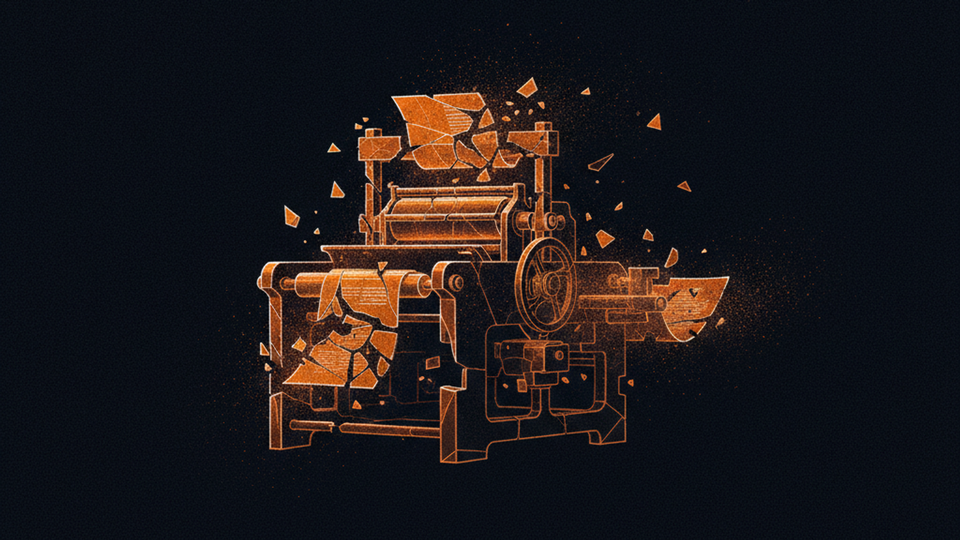
The AI threat everyone worried about isn't the one that showed up — it's worse because it's more boring.
The Summary
- OpenAI caught and shut down two influence operations using AI to generate fake journalists and a fake think tank spreading geopolitical propaganda
- The operations weren't sophisticated deepfakes — they were AI-generated text masquerading as legitimate news sources and policy analysis
- This marks a shift from theoretical AI misuse to documented, operational AI-powered information warfare at scale
The Signal
OpenAI's threat intelligence team disrupted two separate influence campaigns that used their models to manufacture credibility. The operations created fictitious journalists and an entire fake think tank, pumping out geopolitical commentary designed to shape opinion on international conflicts. The content wasn't technically sophisticated. It was just relentless, coherent, and cheap to produce.
This is the mundane dystopia of AI-enabled influence operations. No viral deepfakes of world leaders. No synthetic video that fools forensic analysis. Just an endless stream of plausible-sounding articles from sources that don't exist, written by people who were never born. The barrier to entry for running a propaganda operation just dropped to the cost of an API key.
"The AI threat everyone predicted was science fiction. The one that arrived was paperwork at scale."
The "false front" model is particularly insidious because it exploits trust mechanics that predate the internet. A think tank sounds authoritative. A journalist with a byline and a publication history looks legitimate. Most readers won't verify whether the Atlantic Council Fellow they're reading actually exists. They'll just absorb the argument and move on.
What makes this different from traditional bot farms:
- The content passes as human-written without obvious tells
- Each "journalist" can maintain a consistent voice and expertise area across dozens of articles
- The operation scales horizontally without needing more humans in the loop
The Implication
Every platform, every publisher, and every reader now operates in an environment where the default assumption has to be: this might not be real. Not the video, not the image — the text. The boring stuff. The op-eds and policy papers and news analyses that shape how people think about the world.
For anyone building in this space, this is your user acquisition problem and your trust problem and your moderation problem all at once. The tools to verify human authorship don't exist yet at scale. The economic incentives to flood the zone are now trivial. Watch for verification infrastructure to become table stakes for any platform dealing with written content. And if you're consuming information, get religious about primary sources and direct attribution.