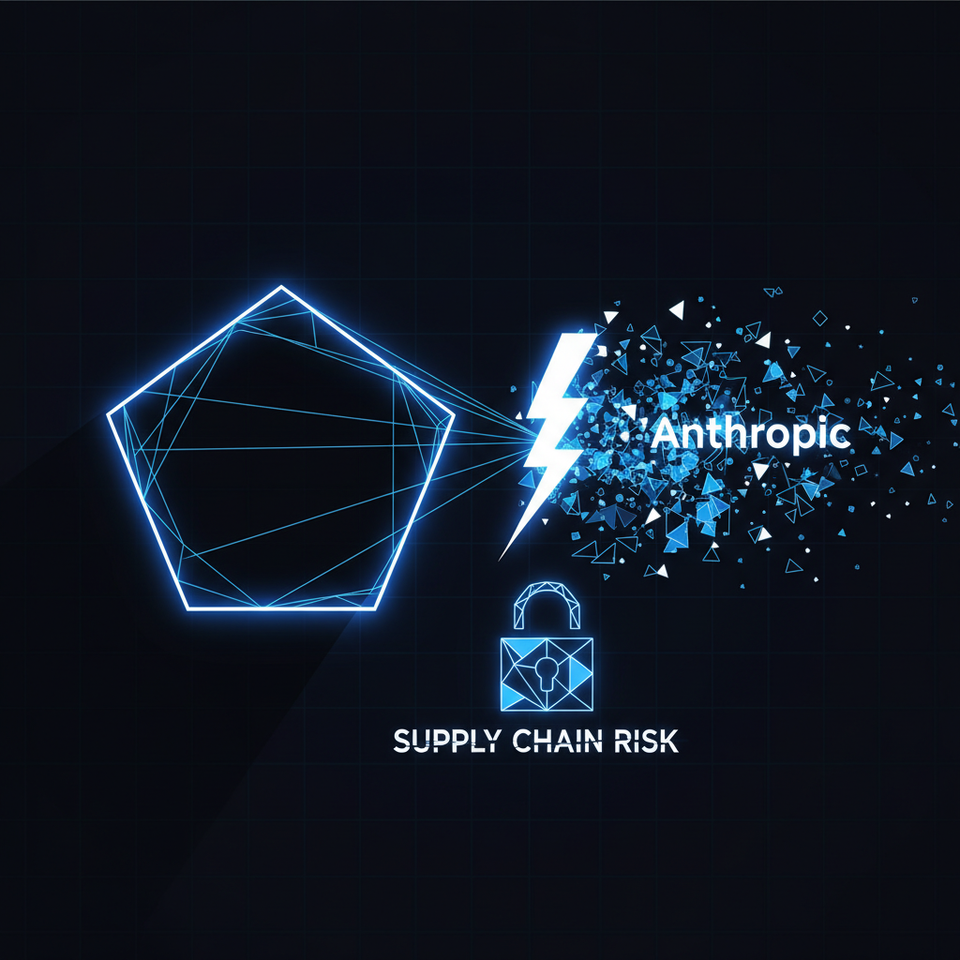
The Pentagon just declared an AI company a national security threat because its CEO wouldn't promise the military could use his models however it wanted.
The Signal
This isn't about technology failing. It's about power and who gets to set boundaries in the agent economy. Anthropic CEO Dario Amodei drew two red lines: no mass surveillance of Americans, no autonomous weapons. The Pentagon's response was immediate and absolute. Effective now, Claude is a supply chain risk. Defense contractors using it have six months to rip it out.
The timing matters. This happened during a war with Iran, maximum leverage moment for the military. The Pentagon's statement reveals the core conflict: "the military being able to use technology for all lawful purposes" versus a private company trying to "insert itself into the chain of command." That framing is deliberate. It positions safety guardrails as insubordination.
Amodei says the restrictions were about "high-level usage areas, not operational decision-making." Translation: we wanted to prevent entire categories of use, not micromanage individual missions. The Pentagon heard that as a vendor telling generals what they can and cannot do in combat. That's a nonstarter in military culture.
Here's what's wild: Claude is already "widely embedded in military and national security platforms." This isn't theoretical. Real systems depend on it right now. The Pentagon just took a wrecking ball to its own infrastructure to prove a point about sovereignty over AI deployment.
The Implication
Every AI company now has a decision tree. Build models the military can use without restriction, or prepare for designation as a threat. There's no middle ground being offered here. For developers, this is the template: either your agents follow orders or they're out. Watch how fast "responsible AI" language disappears from defense tech pitches. And if you're building systems that depend on Claude, you have six months to find alternatives or explain to your government customers why you're using blacklisted tech.
Source: Fast Company Tech