The Pentagon just made AI decision-making systems a battlefield requirement, not a nice-to-have.
The Summary
- Pentagon memo mandates AI-enabled decision-making as core infrastructure for linking sensors to shooters in combat operations
- Project Maven, the DoD's controversial AI targeting program from 2017, is now the template for military AI integration across all services
- This is procurement signal: AI systems that can't prove battlefield decision-making capability won't get funded
The Signal
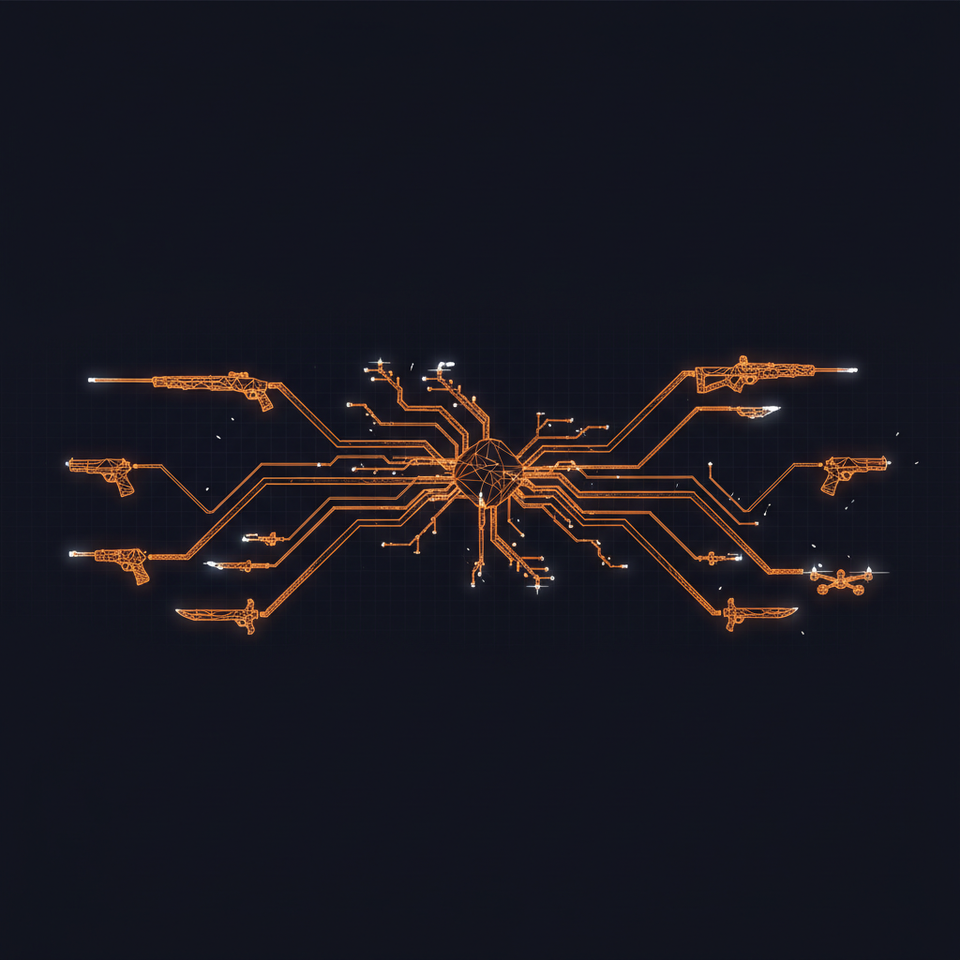
The Pentagon just turned AI from experimental tech into operational doctrine. The policy memo Bloomberg obtained doesn't just encourage AI adoption. It restructures how the military thinks about the kill chain. Sensors (satellites, drones, ground units) generate data. AI systems process that data and recommend targets. Shooters (missiles, artillery, aircraft) execute. The entire sequence, compressed from hours to seconds.
This is Project Maven 2.0, scaled across all domains. Maven started in 2017 as an object recognition system for drone footage. Google employees revolted and the company walked away from the contract. Palantir picked it up. Now Maven isn't a single contract. It's the architecture. The memo positions AI decision-making as the connective tissue for Joint All-Domain Command and Control (JADC2), the Pentagon's long-running effort to make all its systems talk to each other in real time.
What changed? Ukraine. Two years of watching AI-assisted targeting, drone swarms, and real-time battlefield updates proved the concept at scale. The U.S. military watched a smaller force use commercial AI tools and repurposed consumer drones to hold off a larger opponent. The lesson wasn't subtle: automate decision-making or lose.
The procurement implications are immediate. Defense contractors building AI systems now face a clear requirement: prove your system can process sensor data and generate actionable targeting recommendations under combat conditions. Palantir is already there with Maven. Anduril has been building toward this with Lattice. Scale AI has the data labeling infrastructure. Smaller players without battlefield-ready AI are about to lose access to DoD budgets.
The Implication
If you're building AI for defense, this memo is your new design spec. Decision-making speed matters more than decision-making perfection. The military is betting that 90% accuracy in three seconds beats 95% accuracy in three minutes. For everyone else, watch which commercial AI companies start hiring people with security clearances. The line between defense tech and commercial AI just got thinner.
Source: Bloomberg Tech