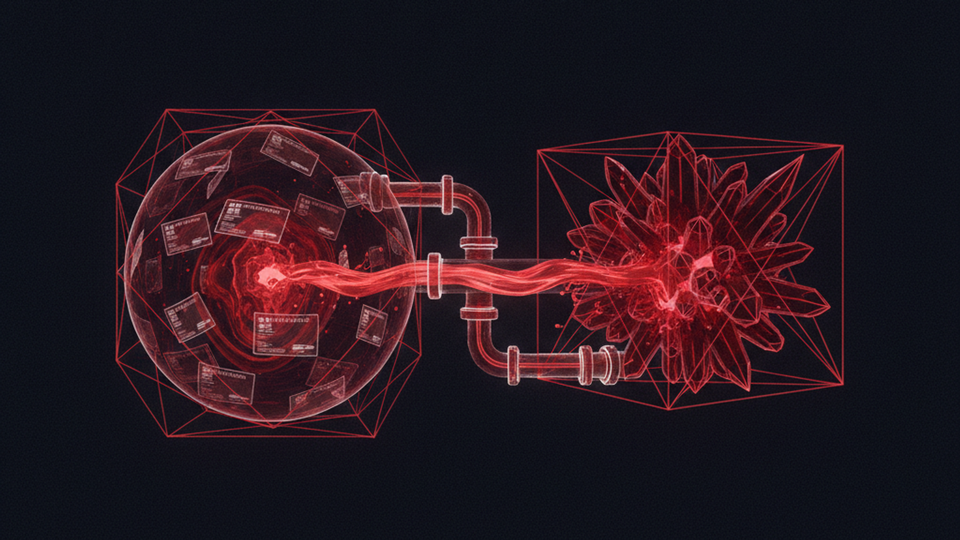
Robinhood just made your leveraged crypto bets tradeable like baseball cards, and the collateral backing them is shares of Apple and Tesla you never had to sell.
The Summary
- Arcus launched pTokens on Robinhood Chain, converting perpetual futures positions into transferable ERC-20 tokens
- Users can now back leveraged trades with tokenized stocks without liquidating their holdings, a first for DeFi composability
- $12M in stock tokens already deposited into DeFi protocols on Robinhood Chain despite US restrictions
- Robinhood Chain's user growth outpaces its TVL trajectory compared to Base, revealing a memecoin-heavy early adoption pattern
The Signal
Arcus just collapsed three layers of financial abstraction into one. Your perpetual futures position is now an ERC-20 token. That token can move between wallets, serve as collateral in other protocols, or get wrapped into yield strategies. Meanwhile, the collateral backing your leverage doesn't have to be stablecoins anymore. It can be tokenized shares of NVIDIA or Berkshire Hathaway. You keep your equity exposure while trading derivatives on top.
This matters because it solves the liquidity trap that's plagued perps since they launched. Positions were locked to accounts. If you wanted out, you closed the position and paid the spread. If you wanted to use your unrealized gains elsewhere, tough luck. pTokens make perpetual positions liquid, which means they can finally flow through DeFi's composability engine the way spot tokens always have.
"Perpetual futures can now be used as collateral, enhancing liquidity and financial flexibility."
The real story is what's already happening on Robinhood Chain before most people noticed. $12M in tokenized stock deposits have hit DeFi protocols in the chain's first weeks. Users are backing crypto trades with fractional shares of real companies without selling. That's the composability thesis playing out in real time. You hold TSLA because you think it goes up. You also want to long ETH. Historically, you picked one. Now you do both.
But the numbers reveal a tension. Robinhood Chain's valuation lags behind Base's early trajectory, even as user counts climb. The gap comes from what users are doing: lots of memecoin speculation, not much real-world asset activity yet. That $12M in stock token deposits is a rounding error compared to the chain's overall volume. Robinhood bet big on tokenized finance as its differentiator. The market so far prefers tokenized dogs.
- Robinhood Chain: high user growth, low TVL relative to Base at similar stage
- Primary activity: memecoin trading, not RWA composability
- Stock token deposits: $12M vs. likely hundreds of millions in memecoin volume
The US restriction shadow looms large here. American users can't access tokenized stocks, which cuts off the biggest retail market and most of Robinhood's natural user base. That's not a technical limitation. It's regulatory reality. So Robinhood Chain launches with its flagship use case locked out of its home country. The platform is scaling internationally first, which works until it doesn't.
The Implication
Watch whether Arcus pTokens gain traction outside pure speculation. If users start treating leveraged positions as composable building blocks, putting them in vaults or lending protocols or using them as collateral in multi-step strategies, that's the liquidity flywheel spinning up. If they mostly just trade them for quick flips, it's a token wrapper on the same old behavior.
The bigger test is whether stock token usage grows faster than memecoin volume on Robinhood Chain. Right now the chain looks like every other L2 at launch: users show up for easy trades, not the stated vision. But Robinhood has distribution and brand recognition that most crypto projects don't. If they can route even 5% of their 24 million funded accounts toward tokenized stock collateral strategies, the $12M becomes $1B fast. Until then, this is promising infrastructure in search of its actual use case.