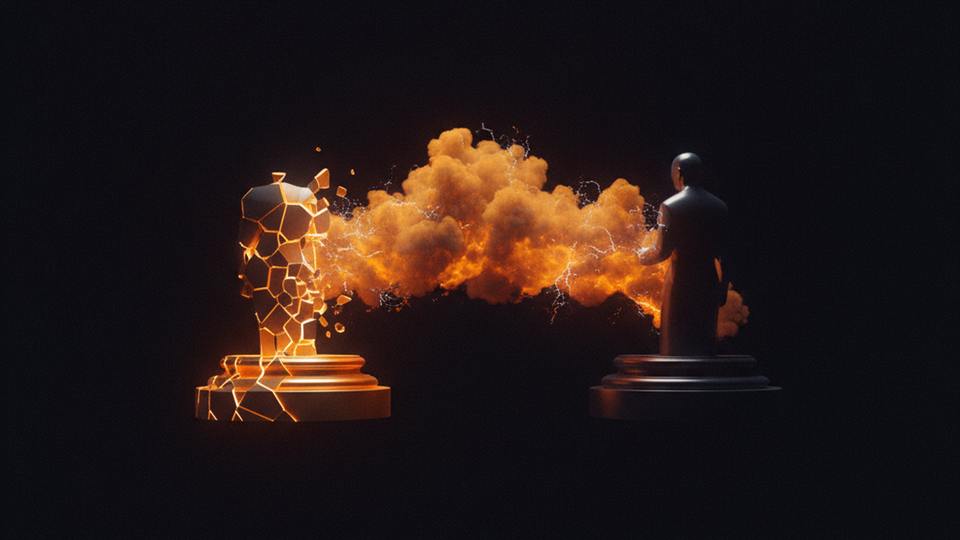
The man who survived his own boardroom exile says he doesn't know enough to weigh in on someone else's — which tells you everything about how different these two CEO ousters really are.
The Summary
- Nvidia's board announced Jensen Huang resigned following multiple reported affairs, triggering a petition with over 100,000 signatures calling for his return
- Sam Altman, asked at a Semafor event whether Huang should pull an Altman-style comeback, said he doesn't know enough to answer — despite calling Huang a personal hero
- Altman thinks the AI industry will be "fine" without Huang at Nvidia's helm, a sharp contrast to the existential panic that accompanied his own 2023 ouster
- The surface parallels (sudden exits, interim CEOs, mass employee support) mask a deeper structural difference: Nvidia is a public company with shareholders, OpenAI was private, and personal conduct scandals play differently than vague "candor" concerns
The Signal
When Altman was forced out of OpenAI in November 2023, the board said he wasn't "consistently candid" in his communications. Vague enough to be damning, specific enough to sound serious, meaningless enough that 700+ employees immediately rallied to bring him back. Five days later, he was reinstated. The whole thing felt like a corporate coup that forgot to plan past the first move.
Huang's exit is structurally different. Nvidia's board cited multiple affairs, which lands in a different legal and reputational category than "communication style." Personal conduct issues at public companies trigger disclosure obligations, shareholder scrutiny, and potential SEC questions that private company boards can sidestep. The fact that President Trump publicly supported Huang's return alongside Elon Musk adds political theater to what should be a straightforward governance question.
"I don't think I know enough to answer that question."
Here's what Altman's careful non-answer reveals: he sees the trap. He acknowledged having "personal, strong empathy" for Huang's situation while simultaneously saying the industry will be "fine" without Huang. That's not the language of someone who thinks Nvidia is facing an existential leadership crisis. When Altman left OpenAI, the narrative was that the company would collapse without him. Altman isn't making that claim for Huang.
The contrasts matter more than the comparisons:
- OpenAI was a private nonprofit-turned-capped-profit hybrid. Nvidia is a $3 trillion public semiconductor company.
- Altman's board concerns were procedural and abstract. Huang's involve personal conduct.
- OpenAI employees threatened to quit en masse. Nvidia employees signed a petition, which is emotionally different.
One corporate leadership expert called a Huang return "unlikely in the near term", which tracks with how public company governance actually works. Boards that remove CEOs for personal conduct don't typically reverse course when employees or even presidents start tweeting. They have fiduciary duties, D&O insurance considerations, and years of precedent suggesting that bringing someone back after a personal scandal creates more liability than holding the line.
The Implication
Watch how Nvidia's stock and customer relationships hold up over the next quarter. If the company executes smoothly under interim leadership, the case for Huang's return weakens regardless of petition signatures. If supply chain partners or hyperscale customers start expressing concern, the board faces pressure from a different direction than employee sentiment.
The bigger signal: we're seeing the limits of the founder-cult playbook. Altman's comeback worked because OpenAI's governance structure was novel and his departure rationale was fuzzy. That's not a template. It's an edge case. Public company boards with specific conduct concerns don't operate like startup boards with vague culture complaints. The comparison stops being useful the moment you remember Nvidia has to file an 8-K.