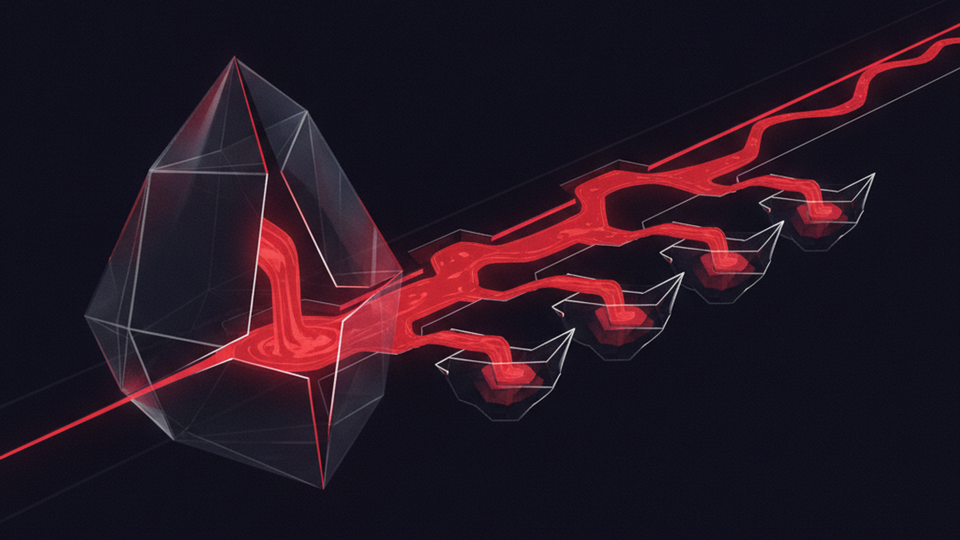
The SEC just let a crypto-native broker-dealer sell Apple and Tesla shares as tokens to American retail investors, which means the "blockchain revolution" finally has to deliver on boring compliance.
The Summary
- Ondo's Oasis Pro Markets received SEC and FINRA approval to offer tokenized equities, ETFs, and funds to U.S. investors through its registered broker-dealer subsidiary
- 42% of investors are ready to buy tokenized stocks, and exchanges like OKX and MEXC are already building out infrastructure for 24/7 trading
- This is the first time a tokenization firm can sell blockchain-wrapped securities directly to Americans under full regulatory supervision, not through offshore workarounds or accredited-only structures
- The real test is whether token rails actually improve settlement speed, reduce costs, and enable fractional ownership at scale, or just add crypto branding to the same old plumbing
The Signal
Oasis Pro Markets, Ondo's broker-dealer subsidiary, can now sell tokenized stocks and ETFs to retail investors under SEC and FINRA oversight. This matters because every previous attempt at tokenized equities in the U.S. either targeted institutions only, required accredited investor status, or operated in regulatory gray zones. Ondo went the hard way: registered as a broker-dealer, submitted to the full compliance stack, and got cleared.
The timing lines up with a wave of infrastructure moves. OKX launched unified markets for 40+ tokenized U.S. stocks and ETFs, addressing liquidity fragmentation by pooling order books. MEXC added five Ondo tokenized stocks spanning semiconductors to power infrastructure. These aren't pilot programs. They're live products with real liquidity, running 24/7 because tokens don't care about market hours.
"The tokenization firm can now sell tokenized equities, ETFs and funds to American investors under SEC and FINRA oversight."
Here's what tokenization theoretically fixes:
- Settlement speed: T+0 instead of T+2 for traditional equity trades
- Fractional ownership: Buy $10 of Nvidia instead of needing $800 for a single share
- Round-the-clock trading: 24/7 access to U.S. stocks and ETFs, not just 9:30am-4pm EST
- Composability: Tokenized stocks can plug into DeFi protocols for lending, collateral, or yield strategies
But theory and practice diverge fast. Tokenized stocks still reference underlying equities held by custodians. You're not holding Apple shares directly. You're holding a token that represents a claim on Apple shares in a vault somewhere. The custodian still has to buy and hold the actual stock. Settlement still happens in the traditional system. The token layer adds programmability, but it doesn't eliminate the legacy stack beneath it.
The demand signal is real. Research shows 42% of investors are ready to buy tokenized stocks, which suggests retail appetite isn't the constraint. The constraint is whether tokenization reduces friction enough to justify the added complexity. If you're a U.S. investor with a Fidelity account, why switch to a tokenized version of the same stock unless it's meaningfully cheaper, faster, or more flexible?
"OKX addressing liquidity fragmentation by pooling order books across tokenized stock markets."
Ondo's regulatory approval changes the calculus. It means tokenized equities can now compete directly with traditional brokerages on U.S. soil, not just offer a novelty product to crypto natives. If Oasis Pro can deliver faster settlement, lower fees, or fractional trading with better UX than Robinhood, it wins. If it's just "stocks but on blockchain" with no tangible user benefit, it's a solution in search of a problem.
The Implication
Watch whether tokenized equities actually get adopted by retail investors who don't already hold crypto, or whether this becomes another product that crypto Twitter talks about and nobody else uses. The regulatory approval is the easy part. The hard part is delivering enough value that someone closes their Schwab account and moves to a tokenized broker-dealer.
For builders, this opens a path to create financial products that were impossible before: programmatic dividend reinvestment, tokenized index funds that rebalance in real time, or collateralized loans against fractional stock positions. The infrastructure is live. The question is who builds the killer app.