The pick-and-shovel play for the agent economy just got industrial.
The Summary
- SoftBank invested $200 million in Gravis Robotics, a Swiss startup building autonomous software for construction equipment
- Construction is the last trillion-dollar industry still running on human reflexes and diesel engines
- SoftBank's betting the robotics stack doesn't need humanoids—it needs brains for the machines we already have
The Signal
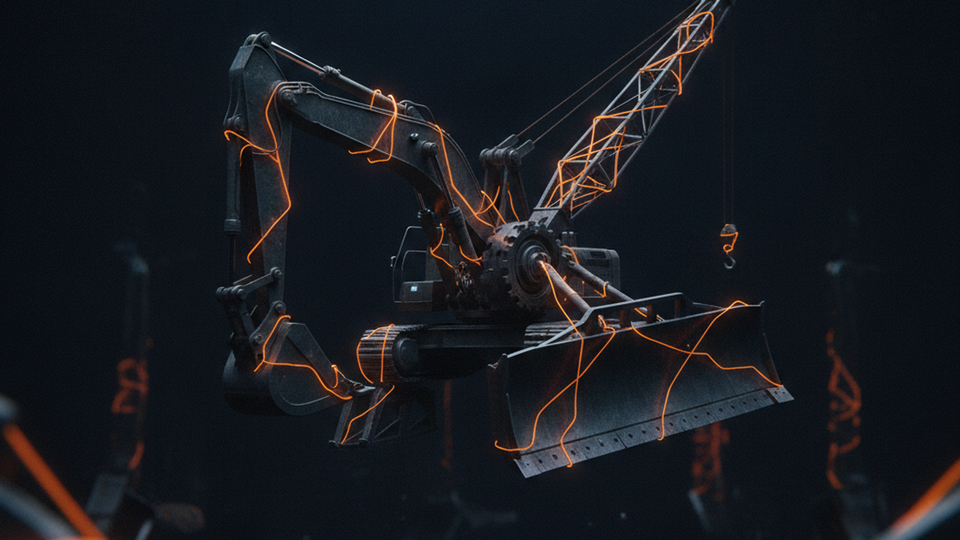
Gravis Robotics isn't building new robots. They're building the intelligence layer for excavators, bulldozers, and cranes that already exist on every job site. The insight: construction doesn't need a hardware revolution. It needs a software retrofit. SoftBank's $200 million Series B says the shortest path to autonomous construction runs through existing fleets, not through R&D labs designing new form factors.
The construction industry employs 11 million people in the U.S. alone and hemorrhages productivity. Labor costs are up 30% since 2020, skilled worker shortages are structural, and project timelines keep stretching. Meanwhile, the machines sitting idle between shifts are already capable of precision work—they just need better pilots. Gravis is building those pilots as software.
"The robotics stack doesn't need humanoids—it needs brains for the machines we already have."
Here's what makes this different from the last wave of construction tech hype:
- Gravis targets retrofit, not replacement—operators become supervisors
- The software runs on existing equipment from Caterpillar, Komatsu, Volvo
- Deployment happens in weeks, not years, because the hardware is already on-site
The Fourth Web pattern is clear. Web4 isn't about building new infrastructure from scratch. It's about adding intelligence to what we've already built. Gravis does for construction what Cursor did for coding and what Replit Agent did for deployment—it turns existing tools into autonomous systems that multiply human leverage instead of replacing human jobs outright.
SoftBank's track record here matters. They've written big checks to WeWork and Zume Pizza that became punchlines. But they also wrote early checks to Arm Holdings and DoorDash. The $200 million into Gravis signals conviction that the agent economy extends beyond knowledge work. It's coming for physical work, too—not through androids on job sites, but through software that makes a backhoe operator supervise five machines instead of one.
The Implication
Watch construction equipment manufacturers. Caterpillar, Komatsu, and John Deere either become software partners or get bypassed by third-party intelligence layers. If Gravis proves the retrofit model works, every piece of industrial equipment with a computer and a motor becomes a target for autonomy software.
For workers, this is the test case for augmentation versus replacement. If construction proves you can 5x an operator's output without eliminating the operator, it rewrites the automation playbook for every physical industry. If it doesn't, we're back to the old script: software eats jobs, and the humans lose.