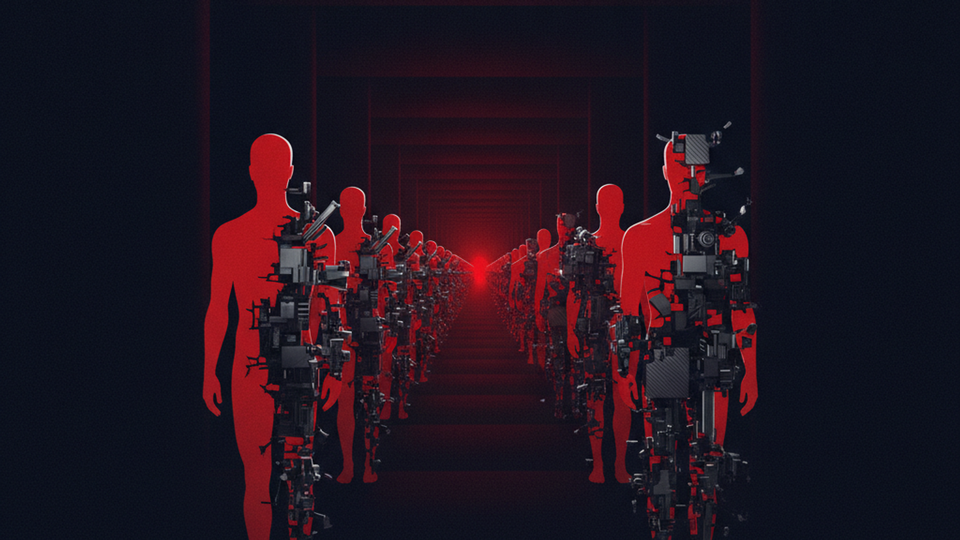
Masayoshi Son is buying a company with 800,000 security guards so he can replace them with robots.
The Summary
- SoftBank is negotiating to acquire Allied Universal, the largest U.S. security services company, in a deal valued at up to $18 billion
- The move signals Son's accelerating push into robotics and AI, buying the physical security infrastructure he plans to automate
- The deal raises questions about SoftBank's leverage and whether Son is front-running the agent economy or just buying expensive transition risk
The Signal
Allied Universal operates 800,000 security guards across the U.S. They stand in lobbies, patrol warehouses, monitor cameras, and check IDs. It's a massive, low-margin, labor-intensive business. Exactly the kind SoftBank wants to transform with robotics and AI.
Son has been loud about his AI ambitions. He's invested billions in autonomous systems, computer vision, and robotics companies through Vision Fund 2. But those were bets on the builders. This is different. This is buying the distribution network, the client relationships, and the operational footprint before the automation wave hits.
"Son is buying a company with 800,000 security guards so he can replace them with robots."
Here's what makes this interesting: Allied Universal isn't a tech company pretending to be a services company. It's a services company with contracts at airports, office buildings, hospitals, and retail chains. Real customers paying real money for humans doing repetitive surveillance work. If you believe computer vision and autonomous patrol robots are 2-3 years from reliable deployment, those contracts become the most valuable part of the deal.
The playbook is obvious:
- Keep the contracts and customer relationships
- Deploy AI-powered camera systems and patrol robots in phases
- Reduce headcount gradually as tech proves out
- Capture the margin expansion as labor costs drop
The leverage concerns are real. SoftBank is already carrying heavy debt from previous Vision Fund commitments. An $18 billion acquisition for a low-margin business adds risk. But Son has never optimized for conservative balance sheets. He optimizes for being early to the next platform shift.
The operational challenge isn't the technology. Computer vision works. Patrol robots work. The challenge is the hybrid transition period where you're running both systems, managing union pushback, and convincing clients that a robot checking their loading dock is as reliable as a human. That transition could take five years. Or it could take two if Son moves fast and the technology compounds faster than labor costs rise.
The Implication
If you work in physical security, logistics, or any job that involves watching things and reporting anomalies, this deal is a timer starting. Not because Allied Universal will flip a switch and go full robotic next quarter. Because the largest player in the industry just got bought by someone who thinks your job can be automated, and he has the capital to prove it.
For AI and robotics companies, watch who Allied Universal partners with in the next 12 months. That's the shortlist of vendors Son believes can actually deploy at scale. For everyone else, the question is whether this is visionary or reckless. The answer depends entirely on how fast the technology actually ships.