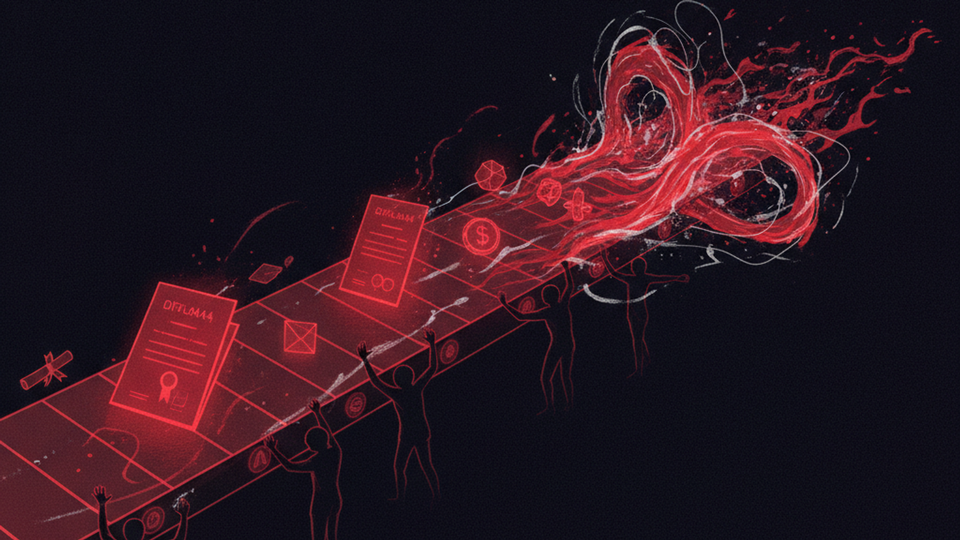
The generation raised on participation trophies and "you can do anything" is now watching AI do everything first.
The Summary
- Young people are increasingly anxious and angry about AI's impact on their job prospects, with students in Pennsylvania battleground districts becoming a focal point of the anxiety
- This isn't abstract worry. It's concrete fear about return on investment for college debt and whether the skills they're acquiring will be obsolete before graduation
- The sentiment is shifting from optimism about AI as a tool to anger at Big Tech as a threat, and that anger has political implications in swing states
The Signal
Pennsylvania students aren't just worried. They're angry at the Big Tech revolution reshaping their futures before they even enter the workforce. This matters because Pennsylvania is a midterm battleground, and when anxiety about AI meets student debt and job prospects, it becomes a voting issue. The kids who were supposed to be excited about the future are now organizing against it.
The timing is brutal. Students are taking on massive debt for degrees that train them for jobs AI companies are actively trying to automate. Design students watch Midjourney. Coding bootcamp grads watch Cursor and Devin. Business majors watch every Fortune 500 company announce AI efficiency gains, which is corporate speak for "we need fewer of you."
"Young people are increasingly anxious and angry about what [the Big Tech revolution] means for their job prospects."
This isn't the usual generational anxiety about entering the workforce. Previous generations worried about competing with their peers or outsourcing. This generation is watching the entire premise of knowledge work get questioned in real time. The deal was: go to college, get skills, get a good job. The new reality: go to college, get skills, watch those skills get compressed into a prompt.
What makes this politically potent is the location. Pennsylvania students in a midterm battlefield represent a demographic that both parties need and neither has figured out how to address on AI. Republicans can't credibly promise to stop technological progress. Democrats can't credibly promise to regulate their biggest donors. So students are left holding expensive degrees and watching LinkedIn fill with "AI replaced my job" posts.
The shift from anxiety to anger is the signal here. Anxiety is passive. Anger organizes. And when it organizes in swing states during midterms, it moves from a think piece problem to a political problem. Young people's growing anger at Big Tech isn't about privacy or misinformation anymore. It's about survival. They're watching the ladder get pulled up in real time, and they know who's holding the rope.
The Implication
If you're building AI tools, understand that your target market's younger siblings hate you. Not because your product doesn't work, but because it works too well at making their degrees worthless. The political calculus is shifting. Student debt forgiveness was the hot topic last cycle. This cycle, it might be AI regulation framed as job protection.
For students: the anxiety is valid, but the anger needs direction. The question isn't whether AI will change work, it's who benefits from that change. Learn to work with agents, not compete against them. Build things AI can't replicate: judgment, taste, the ability to ask better questions. And vote like your economic future depends on it, because it does.