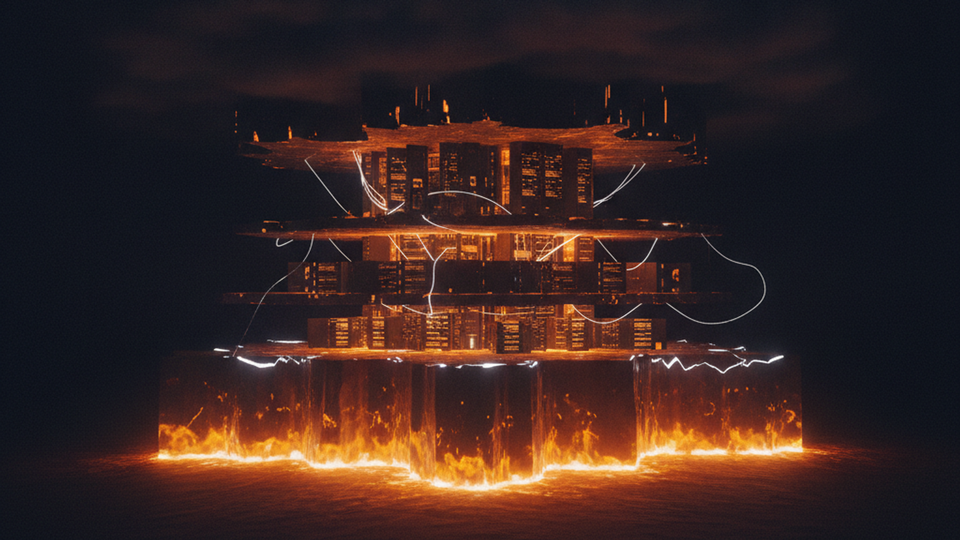
The picks-and-shovels play just became a $2 billion bet that AI workloads will need more power, not better algorithms.
The Summary
- Switch Inc., the data center operator, is raising ~$2 billion in a funding round led by Andreessen Horowitz
- This marks one of the largest private capital raises for physical infrastructure in the AI era
- Follow the money: when a16z writes checks this size for concrete and cooling systems, they're betting compute constraints matter more than model innovation
The Signal
Switch operates massive data centers across the U.S., the kind of facilities that house the actual servers running AI training runs and inference workloads. This $2 billion raise signals a fundamental shift in where smart capital thinks the bottleneck sits. Not in model architectures. Not in algorithmic breakthroughs. In raw compute capacity and the physical infrastructure to power it.
Andreessen Horowitz leading this round is the tell. They've spent the past two years funding AI application companies and agent platforms. Now they're betting on the layer beneath all of that: the buildings that keep the lights on when millions of agents start running 24/7 workloads.
"When AI goes from research project to production infrastructure, someone has to pay the electric bill and keep the servers cool."
The timing matters. We're entering the phase where AI companies stop optimizing for parameter efficiency and start optimizing for compute availability. Training runs that took weeks now need to finish in days. Inference workloads that served thousands now serve millions. Every agent company, every RAG application, every fine-tuned model needs somewhere to actually run.
The infrastructure math is brutal:
- Training a frontier model can consume as much power as a small town for weeks
- Running inference at scale requires low-latency compute distributed globally
- Agent workloads run continuously, unlike human-driven applications with peak hours
Switch isn't building data centers for today's workloads. They're building for the moment when autonomous agents become economic actors, when every business runs AI operations around the clock, when compute becomes the actual constraint on how fast the agent economy can scale.
This raise also says something about where value accrues. In Web2, the cloud providers captured most of the margin. In the agent economy, physical infrastructure might fragment that power. If you control the data centers, you control access to compute. If compute is the constraint, you control the bottleneck.
The Implication
Watch what gets built next. If Switch is raising $2 billion, others will follow. The next 18 months will see massive capital flowing into data center capacity, power infrastructure, and cooling technology. For agent companies, this means compute availability could actually improve, bringing costs down and making more complex autonomous operations viable.
For workers and businesses, the implication is darker: when this much money flows into infrastructure to support AI workloads, the people funding it expect those workloads to replace entire job categories, not just assist with them. You don't build billion-dollar data centers to help humans write better emails.